President Obama takes tentative steps toward Sentencing Reform

Screen Shot 2013-12-23 at 6.52.21 PMDecember 23, 2013

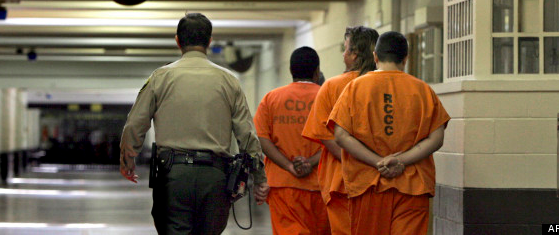
In a tentative step toward federal sentencing reform  President Obama reduced the sentences of eight prisoners serving long federal prison sentences — six of them life sentences — under draconian laws for crack-cocaine sentencing. He also pardoned 13 others, at least six of whom were in prison for drug offenses.

This administration has been reluctant to use the pardoning power of the president to effect prison sentencing reform. In this instance, the President noted that some prisoners effected by his pardon would have been released under new federal laws enacted over the past two years.

. “Prior to Thursday’s announcement, he had commuted only one sentence during his tenure, out of 8,700 commutation applications” according to Families Against Mandatory Minimums. His rate of both pardons and commutations was the lowest of any president in modern history.

The administration argues that they are getting prison and sentencing reform ready for the coming year and expect to pass important criminal justice reforms with the help of conservative legislators. And perhaps, the President’s strategy is correct, as conservative a Senator as John Cornyn (R-TX)  has introduced a prison reform bill.

In the Senator’s statement introducing the bill, he noted, “Modeled after successful reforms in Texas, this bill will target only non-violent, low-risk offenders to reduce the taxpayer burden, while ensuring that dangerous criminals remain off the streets. By working to reduce the number of repeat-offenders, we can improve safety, as well as costs, for our communities.”

We may find the Administration letting Conservatives take the lead in Prison and Sentencing Reform is the best strategy for getting reform passed.

Ohio Prison Reform Not Reducing Recidivism


Screen Shot 2013-12-16 at 10.42.29 PMDecember 16, 2013

Ohio prisons director Gary Mohr is concerned that a package of prison reforms passed in 2011 have so far failed to achieve their goal of reducing the number of prisoners.

Director Mohr in an interview with members of the Northeast Ohio Media Group and Plain Dealer editorial boards, said “some aspects of that law, which was Senate Bill 86, haven’t worked – such as risk-reduction sentencing, which allows the release of certain prisoners who complete treatment and programming while incarcerated.While about 50,000 people have been sent to prison in the state since the new law took effect, Mohr said, risk-reduction sentencing has been used in less than 400 cases.

“There’s something wrong with it,” Mohr said. “It’s wrong or we haven’t communicated it well enough (to judges)”. Risk-Reduction Sentencing allows judges to issue what are called “risk-reduction” sentences. That means if inmates have a good record in prison and participate in programs, they qualify to get out early. As described in an ACLU article on the Ohio dilemma, “Why did things turn out this way? The short answer is that the bill’s provisions haven’t had the impact that lawmakers expected because its provisions aren’t being fully utilized.”

Interestingly, last year we reported on the conflict between Ohio judges and the Corrections Department’s interest in keeping less serious offenders out of prison (“Judges Upset at Ohio Prisons for Rejecting Commitments”). At the time we were reporting a different aspect of the Reform Package, a section that would prohibit the court from sending non-serious first offenders to prison, if rejected by the Corrections Department. Some judges bridled at what they saw as a loss of sentencing discretion.

The issue is very much the same. And it it exists across the nation. Judges reluctant to use new discretionary powers to keep offenders out of prison or to release them early under new statuary authority. Whether its California judges sentencing offenders to straight jail terms on prison sentences (rather than jail and community supervision), or Ohio judges refusal to use their discretion to keep non-violent offenders out of prison, Judges are reluctant to use scientific evidence-based risk assessments in sentencing non-violent offenders to non-prison sentences.

For the first time in decades, the legislatures, governors, and corrections agencies in a multitude of states are handing judges the tools to use their discretion to keep offenders out of prison and under community based supervision. The shame is that so few are willing to do so.

.


Prison Pop. down 3 Years in a Row

Dec. 9, 2013

Screen Shot 2013-09-09 at 8.28.52 PMAfter reaching a high of 1 in 100 adults behind bars in 2008, the U.S. prison population has now declined for three consecutive years. According to new data released by the federal Bureau of Justice Statistics, the number of offenders in state prisons decreased 2.1 percent during 2012. The state imprisonment rate also dropped by 2.6 percent. The federal prison population continued to grow, though at a slower pace than in recent years.

According to Adam Gelb, Director of Pew’s public safety performance project, “Growing prison populations aren’t fate or simply the product of giant forces of social or demographic trends. They are primarily the result of policy choices. State policymakers on both sides of the aisle are now taking deliberate steps to bend the curve and these are starting to pay off in lower costs and less crime.”

Cal jails see increased violence since Realignment?

Screen shot 2012-11-04 at 6.14.22 PMDec. 2, 2013

The media is having a field day quoting anonymous sources, arguing that an increase in jail violence in California Jails is due to the more violent offenders who would have been placed in prison, and now being placed in California jails under Realignment Reform.

The story is accurate as far as it goes but it doesn’t necessarily go far enough. The combined population In the 10 largest county jails grew 14 percent through 2012 while inmate-on-inmate assaults rose 32 percent and inmate-on-staff assaults rose 27 percent. Clearly a significant increase.

But when you look behind the numbers, you find some obvious and even some unsuspected causes.

1. When you put more offenders in a jail (as in a prison), there will be more violence as the overcrowding causes an increase in tension and violence (remember the experiments with rats in a cage from high school). The fact is that while some jails are experiencing greater violence, jail population is up; prison populations are down and prison violence is down.

“Simultaneously, the state Department of Corrections and Rehabilitation saw a 15 percent drop in inmate-on-inmate assaults within state prisons, while attacks on employees dropped 24 percent as the prison population dramatically declined last year, according to statistics obtained through a separate public records request by the AP.” (NBC News)

2. Jails aren’t designed for long term offenders. If you put those with ten year sentences in a jail (as realignment allows), there will be consequences. But that ignores the very purpose of Prison Realignment. In pre-realignment times, counties dumped their bad boys and girls in state prisons far from home where they wouldn’t have to deal with them for as long as the county judge sent them up for. It was a free ride, the state picked up the tab and a lot of counties took full advantage of that. Realignment is bringing accountability and financial responsibility back to the sentencing county where it ought to be.

3. Following  up on Point 2, Realignment was designed to encourage county judges to split prison sentences and use alternatives to incarceration whenever appropriate. Those sentenced to prison, yet placed in county jail (I know, it can be hard to get a hold of that concept), would receive a portion of the sentence in jail and the rest in what is euphemistically called “mandatory supervision”,  (another way of describing probation for the serious offender). What was envisioned was judges using split sentencing to transition offenders from jail into the community under supervision, where alternatives to incarceration would be available to the offender The last statistics I’ve seen suggest that the courts are not up to the task. Except for some outstanding exceptions (Santa Clara, San diego, and a few more), sentenced prisoners get straight jail sentence more than eighty percent of the time. And when a judge does that, the sentence is final, and the offender remains in jail for the full term.

So when you read about how California Realignment isn’t working, it’s a good  idea to read down to the bottom of the article, for a fuller picture “Sacramento County was the only one to see a decrease in inmate-on-inmate assaults, while Alameda, Los Angeles and Santa Clara counties saw declines in assaults on staff.”

This is a work in progress that many would like to roll back. While Realignment is unlikely to go away, the big push is to build jails that are virtual prisons. Watch for it.


 

© 2007 -  Reentry Court Solutions. All Rights Reserved.


Reentry Court Solutions Powered by Communications Team