Reauthorized Second Chance Act will include Reentry Courts

November 18, 2013
Picture 3Reentry Courts which appeared to have been written out of the reauthorized “Second Chance Act”, received a reprieve when language that included reentry courts as possible grantees of Second Chance Grant funds was inserted into the Reauthorization  Act. (see below)……………………………………………………………………………..
[An issue worth pondering: while reentry courts may be funded under the reauthorized Act, previous references to the court as a necessary partner and participant in grants applications, has to my knowledge, disappeared from grant guidelines. In fact, while the inclusion of reentry drug courts as possible recipients of Second Chance Act grant awards is clearly a positive, the inclusion of the courts as necessary partners in the application and implementation of all grants would be a much more appropriate and important inclusion]………………………………………………………………………………………………………………………………………………………
From the Amended legislative language: “In this section, the term reentry court means a program that—(1) monitors juvenile and adult eligible offenders reentering the community; (2) provides continual judicial supervision; (3) provides juvenile and adult eligible offenders reentering the community with coordinated and comprehensive reentry services and programs, such as—(A) drug and alcohol testing and assessment for treatment;( B) assessment for substance abuse from a substance abuse professional who is approved by the State or Indian tribe and licensed by the appropriate entity to provide alcohol and drug addiction treatment, as appropriate; ( C) substance abuse treatment from a provider that is approved by the State or Indian tribe, and licensed, if necessary, to provide medical and other health services;(D) health (including mental health) services and assessment; (E) aftercare and case management services that—(i) facilitate access to clinical care and related health services; and (ii) coordinate with such clinical care and related health services; and (F) any other services needed for reentry; (4) convenes community impact panels, victim impact panels, or victim impact educational classes;(5) provides and coordinates the delivery of community services to juvenile and adult eligible offenders, including—(A) housing assistance; (B) education; © job training; (D) conflict resolution skills training;(E) batterer intervention programs; and (F) other appropriate social services; and (6) establishes and implements graduated sanctions and incentives.”


Life Without Parole for Non-Violent Offenders

Screen Shot 2013-11-19 at 7.53.48 AM

Novemebr 18, 4013

Taken from a Press Release from the ACLU: “In the first-ever study of people serving life without parole for nonviolent offenses in the United States, the American Civil Liberties Union found that at least 3,278 prisoners fit this category in federal and state prisons combined.”

“A Living Death: Life Without Parole for Nonviolent Offenses” features key statistics about these prisoners, an analysis of the laws that produced their sentences, and case studies of 110 men and women serving these sentences. Of the 3,278 prisoners, 79 percent were convicted of nonviolent, drug-related crimes such as possession or distribution, and 20 percent of nonviolent property crimes like theft.

The report goes on to state that the number of offenders sentence to life without parole has quadrupled over the last twenty years, with 65% African-American.

There are now important forces at work to reform this anomaly. Senators Rand Paul and Patrick Leahy, Attorney General Eric Holder and other influential policy makers are coming out for the reduction and /or elimination of the mandatory minimum laws that make these outrageous sentences possible. It’s important to remember the 3000+ offenders presently serving  life terms, when we reform the mandatory minimum laws.


Attorney General Endorses Federal Reentry Courts

Screen Shot 2013-11-12 at 8.51.44 AMNovemeber 11, 2013

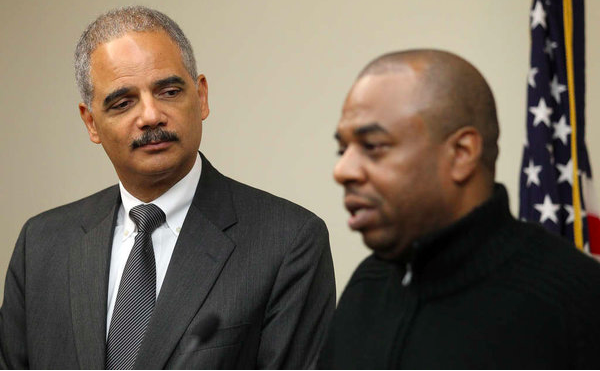
Last week, Eric Holder, the U.S. Attorney General journeyed to Philadelphia to attend a session of the STAR Federal Reentry Court Program. The STAR Program (Supervision to Aid Re-entry) has shown substantial success.  Nationally, 47 percent of federal offenders return to prison before the end of their court-mandated supervision. Among STAR participants, that figure is about 20 percent, the U.S. Attorney’s Office said. Officials estimate STAR has already saved $1.5 million in incarceration costs.

Attorney General Holder sat through a session where seventeen participants talked to the presiding judge about their experiences in an informal setting and received individual attention and encouragement from the judge and reentry court team. Holder expressed great admiration for the Philadelphia Reentry Court Program and described similar efforts as a high priority for the remainder of his term.

RCS has visited the STAR program before. In 2010 we published the STAR Reentry Court’s Annual Report (see 2010  STAR Annual Report) While Federal Reentry Courts are a welcome addition to existing Problem-Solving Courts, to be honest their success has been limited by the number of participants .

The Federal Reentry courts, have been to my knowledge, the only significant attempt by the federal courts, themselves, to monitor and support offenders leaving federal prisons. The numbers of participants are small; apparently 17 current participants in the Philadelphia program (some Fedral Reentry Courts have as few as ten participants). Compare that to the vast number of offenders in need of  similar programs. And while the Philadelphia Reentry Court has shown a willingness to deal with serious and violent offenders in its programs, most other Federal Reentry Courts have been reluctant to do so.

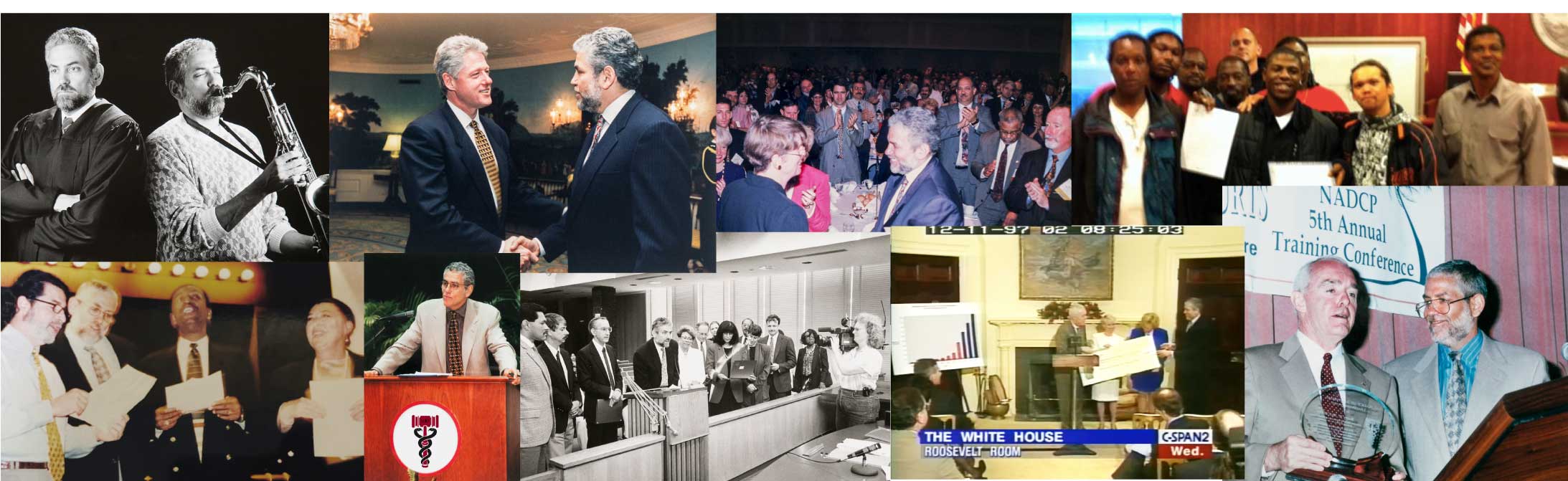
As background,  I first approached Federal Judicial and Probation Officials in 1999, as  President of NADCP (National Association of Drug Court Professionals). They were dubious at best as to the potential of Drug Courts or other Problem-Solving Courts, at the front end of the sentencing process.. When we suggested that a similar program be embedded at the backend of the prison term, they did not seem particularly interested. Since then, there has been a small shake-up in the Federal Courts re alternatives to prison.

There are apparently over forty Federal Courts across the nation who have embrace the Problem-Solving Court concept. The structural, institutional, and procedural adherence to the Problem Solving Court Model has been uniformly exceptional. What is a concern is the token quality of the federal commitment. I don’t know why the federal push for reentry court has been so limited, but i do know that it needs to reach out to a substantial number of offenders to have any significant impact on recidivism.  I do not say this lightly. One or three or five percent of released Federal Offenders are a good beginning for a well structured program that has made a commitment to deal with a great many more. I hope that the Attorney General’s endorsement and setting of Federal Reentry Courts as a priority for the Justice Department will make a difference.


72 Nations meet to Promote Prison Reform

Screen Shot 2013-11-04 at 3.45.00 PMNovember 4, 2013

Important news on the Prison Reform Front from Colorado this week.The International Corrections and Prisons Association conference met in Colorado Springs last week at their 15th annual conference. The Conference theme this year was  “Thinking Outside the Cell: Reducing the Use of Imprisonment”. The fact that the International organization representing the prison leadership of 72 nations would focus their annaul conference on “Reducing the Use of Imprisonment” is an important harbinger of things to come.

Prison directors from 72 countries from Namibia to the Netherlands attended the week-long conference in large part to look at ideas for reducing a world prison population of more than 10 million inmates

More than 500 delegates  filled the conference halls of the Antlers Hilton in downtown for the weeklong summit. Chief among a the workshop subjects and discussion sessions was the issue of mental health in corrections. More than 100 delegates lead sessions through Friday, touching on Screen Shot 2013-11-04 at 3.40.42 PMdiverse subjects, such as “In the Mind of a Gang Leader,” and “The Use of Segregation.”

Tineke De Waele of Belgium, the executive director of ICPA, said conference workshops are focused on alternatives to prison and ideas for moving inmates safely into the community.While prisons are crucial for keeping citizens safe, they are costly and often serve as learning centers for other types of crime, she said.“It is important that all countries look for alternatives to incarceration,” De Waele said.

“Every nation and jurisdiction delivers justice differently, but the ICPA gives all of us the opportunity to network, build partnerships and learn from each other,” said Canada Correctional Service Commissioner Don Head.” Ruben Fernandez Lima, director general of prevention and social rehabilitation for the state of Mexico said.”I do believe that at this point in the world, prisons are at a breaking point,”

It seems that the theme of reducing and reforming prisons has achieved  a level international importance in many (if not most nations). It means that momentum for prison reform is growing. It also means that we need to take advantage of this shift in the wind, and push for reform now, before old mindsets reassert themselves..


© 2007 -  Reentry Court Solutions. All Rights Reserved.


Reentry Court Solutions Powered by Communications Team