Senate Bill to modfiy Mandatory Minimums

Sen. Rand Paul photo rand-paul.jpgTwo sentators, Leahy of Vermont, and Rand of Kentucky, have introduced far-reaching legislation, “The Justice Safety Valve Act of 2013”. The bill, if passed, gives federal judges greater latitude in making sentencing decisions.  Ultimately, this could be the beginning of the end of “Federal Mandatory Minimums”.

What is so extraordinary about this effort is not that Democratic Senator Leahy has introduced the bill, or that it is bipartisan effort, but who the republican co-sponsor of the bill is. Rand Paul has been making a name for himself, taking libertarian stands on everything from filibustering  the use of drones within the U.S., to adocating for non-custodial sentences for marijuana users . His championing of flexibility for federal judges’ sentencing, should be a clear sign to the right that this is a safe position to take in the battle over prison reform.

Paul is quoted as saying “Our country’s mandatory minimum laws reflect a Washington-knows-best, one-size-fits-all approach, which undermines the Constitutional Separation of Powers, violates the our bedrock principle that people should be treated as individuals, and costs the taxpayers money without making them any safer. This bill is necessary to combat the explosion of new federal criminal laws, many of which carry new mandatory minimum penalties.”

 I could not have said it any better. Alllies sometimes come from the strangest places. I am going to write him a letter, thanking him for taking his position on federal manatory minimums. This might be a good use of your time as well. I’ll release mine, when the next edition of RCS is published, next Monday,

Cal. Repub introduce bill to roll back Realignment

March 25, 2013

Screen Shot 2013-03-24 at 5.51.53 PMSenaor Morell (R-Rancho Cucamonga), introduced a bill last week that would substantially alter the realignment reform Plan currenty in place in California. Republican leaders in the state Senate and Assembly had included Morrell’s bill as part of a 13-point plan to reform “realignment. The Assembly Public Safety Committee voted Morell’s bill down March 12 on a party-line vote.

Among other substantial modifications, was a change in the law that would allow those with a three year sentence or greater, to be sent to State Prison. It isn’t strain see how that modification would devastate the current realignment’s  intent to keep less serious offenders under county supervision, and financial responsibility with the county. The provision alone is a major reason that state prisons populations have been reduced by over 40,000 prisoners over the past two years.

Virtual Incarceration is Here!

March 19,2013

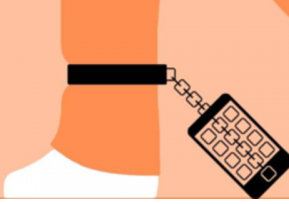
Screen Shot 2013-03-19 at 10.02.16 AMIt sounds like something out of an “Arnold” movie. We all knew it was coming. GPS, home detention, long range alcohol detection, all were leading us to the next level of alternatives to custody; “Virtual Incarceration”. Personally, it’s taken a while before I could climb aboard the band wagon, but here I am. There are people that need to be in prison because they are a danger to society and there are those, at the other end of the spectrum of supervision, that can be supervised, monitored , and even treated through digital technology.

Public Radio international, reports that, “A group of panelists at this year’s South by Southwest interactive media conference in Austin, Texas, presented an idea to improve the U.S. prison system with smart phone technology.The consulting firm, Deloitte, and its think-tank, GovLab, led a discussion on alternatives to the brick-and-mortar prisons low-level criminals are sent to. suggested the U.S. keep low-level criminals out of prison, using smart phone technology”. (click on the image on the left for the article and audio of the panel discussion)

One senior consultant for Deloitte, suggested “virtual incarcerations,” where nonviolent, low-level offenders are taken out of prison cells with support and monitoring that keeps both the community and the offender safe.

“When a court determines a low-level criminal is a good candidate for the smart phone program, they would be equipped with an ankle-monitoring device to track them with GPS, and given a locked smartphone with specific apps related to their needs.” For example,  A DUI offender might require Breathalyze, an app that detects eye movements in the camera on your phone”. The app would also allow the offender to meet with his parole officer via FaceTime on his phone.

These are good ideas, many of which are already being used in some jurisdictions. But it would be interesting to see a pilot project that put together all aspects of high tech supervision into what is now called “Virtual Imprisonment”.

Oklahoma turns back on Prison Reform

March 18,2013

Screen Shot 2013-03-19 at 11.57.54 AMOaklahoma consistently is among the top five states in the use of incarceration (number one for women). Under these circumstances one might expect it to follow in the steps of its conservative neighbors, especilly Texas, who have led in the extraordinary reduction in imprisonment and adoption of alternative to prison policies.

That was the case until recently, when according to the City Centinel, Governor Mary Fallin’s administration did an about face in its commitment to prison reform. The “justice reinvestment” initiative” (JRI), has in recent weeks seen a substantial weakening of prison reform plans, culminating in the resignation of JRI author Kris Steele, former speaker of the state House, from the inter-agency and private sector working group that was overseeing implementation”….Once again according to the Sentinel,”Gov. Mary Fallin’s legal counsel, Steve Mullins, has guided major shifts in administration and oversight in recent weeks, effectively gutting the infrastructure that led implementation until mid-February.”

The easiest way to follow the conflict and its various parambuations is to look at the individuals these changes are likely to affect.

According to Corrections Officials,” only a handful of parole violators were in the agency’s pipeline for intermediate sanctions (short of a return to full-fledged imprisonment) for what were described as technical rather than substantive or deliberate parole violations. While” Mental Health Department officials, in contrast, described early implementation touching more than 120 individuals…”

The “Tulsa World” describes this latest failure of will, as just one of a long history of planned prison reform failures in Oklahoma. This, of course, is just another example of the backsliding we are observing, as conservative states and jurisdictions actually come up against real reform and its consequences. More than a few step back from the brink, a phenomenum that is important to note and report as happens.

As I’ve descried in the past, the failure of states to embrace reform is important to note, but failures to implement or provide the  structure, resource or institutional support that can make prison reform and reductions in recidivism real, are a more insidious form of failure, that we need to be ever vigilant about.

Federal Reentry Courts and Other New Models of Supervision

March 11, 2013

Screen Shot 2013-03-11 at 2.09.10 PM


A new article on Federal Reentry Courts, by the Honorable Laurel Beeler, has been published in the March edition of the Federal Lawyer. It deals with the different models of Reentry Court as well as other problem-solving courts available at the federal court level (click on image on the left for full PDF of article).

The article  provides general information and an excellent introduction for those with an interest but little background in Federal Reentry Courts.


1 Year Process Evaluation of 8 Reentry Courts

March 11, 2013

Picture 3The DOj is putting money and effort into a project that  focuses on the  development of court based reentry efforts. One can sometimes get the impression that the courts are not a significant focus in the  federal government’s approach to state prison reentry issues. This project shows the opposite to be true.

The National institutue of Justice has released a one year process evaluation of eight Adult Reentry Courts that are sponsored under the BJA Second Chance Act. The National Institute of Justice’s “Evaluation of Second Chance Act Adult Reentry Courts: Program Characteristics and Preliminary Themes from Year 1”, was authored by Christine Lindquist, Jennifer Hardison Walters, Michael Rempel, and Shannon M. Carey. The document is the product of RTI International, The Center for Court innovation and NPC Research.  (click on image on the left for PDF of evaluation)

The eight reentry court jurisdictions being funded and evaluated are Union County, Arkansas, New Castle County, Delaware, Pinellas County, Florida, Boone County, Missouri, Strafford County, New Hampshire, Stark County, Ohio, Bexar County, Texas, and Norfolk County, Virginia.

The process evaluation will document the implementation of the evolving programs through three rounds of site visits, and be followed by an impact evaluation and a cost –benefit evaluation.

 From the I year site visit and process evaluation,

“Several programmatic characteristics were common across most sites, including the emphasis on post-release service delivery, the provision of a breadth of services relevant to the target population (with all sites offering substance abuse treatment and employment services), the use of a case management approach to coordinate and monitor services, the use of court hearings for the purpose of monitoring participants’ progress in the program, the use of drug testing, and a team approach to decision-making regarding sanctions and rewards. In all sites, reentry court participation is used as a condition of supervision, with the sentencing judge retaining jurisdiction over the participant in most sites. Therefore, almost all participants are under community supervision by a parole or probation officer for the entire duration of reentry court participation.”

Penn. to Scrap Current Half-Way House Contracts

March 4,2013

Screen Shot 2013-03-04 at 11.47.48 AMAn article in the Patriot Post, reports that “the state [Pennsylvania] is scrapping all contracts with the private companies that run 38 community corrections centers – better known as half-way houses – requiring them to rebid and making the new contracts performance-based. Pennsylvania is reacting to statistics showing that people who go through half-way houses are actually more likely to return to prison than people paroled directly to the street.

At first, it appears a reasonable plan, but there are concerns that need to be addressed. One issue  relates to the  nature of  different prolee populations in half-way houses.  Those with a high risk assessment may do poorly, as will drug addicts vs. those who are only drug abusers. Furthermore, it makes sense that those who are under greater observation in a half-way house will be found  in violation of their parole at a greater rate than those who are under minimal supervision. These are realities that one would expect the governor’s office to understand.

And then there are the intangibles.. The proposed program intends to include the number of arrests during and after half-way house residence, rather than relying heavily upon returns to prison. In some communities, this plan would give the police license to close down half way houses at will (and possibly return parolees to prison).  In my experience as a Reentry Court Judge in San Francisco, I fould that parolees were arrested more frequently than parolees in any other California county. Upon looking into the matter further, it was obvious that San Francisco parolees were an easy arrest target for police (a parolee with a search clause). Living in a twenty block area known as the Tenderloin, all parolees lived in a ghetto of drug addicts, the mentally ill, those on probation or their Own Recognizance, the old and infirm, and their predators. In a high income city’s ghetto, with little opportunity to live elsewhere, it was nearly impossible for parolees to live  a healthy,drug and crime free life.  In 2010, the return to prison rate for non-reentry court parolees was approximately 78%. Making arrests of parolees in the Tenderloin was like shooting fish in a barrel.

Before instituting an incentive based half-wayhouse program, Pennsyvania may want to review the scientific literature on half-way houses. Those that are most successful have prepared the parolee for the transition to the community while still in prison, providing counseling, education, and job training, and importantly “cognitive behavioral therapies” (the only program dealing with criminogenic risk showing significant success).

People ultimately make a program successful or not. Half way houses often are poorly resourced, with staff who have little expertise or training for their positions. Additionally many states stuff hundreds of transitioning parolees into half-way houses with deplorable but expected results. New Jersey was rocked this past July by revelations in a Series in The New York Times, describing “escapes, drug use, lax security and violence — including sexual assaults — at facilities intended to transition individuals back into the community, often after serving jail time. The report said since 2005, there have been about 5,100 escapes from the state’s halfway houses, many run by Community Education Center”.( a predictable outcome where hundreds of offenders were in individual half-way houses, when what is needed is individual programs made up of a few dozen particpants at best, with a high ratio of workers to participants; to view comprehensive New York Times articles, click on photo on left.)

Since Pennsylvania is prepared to hold Half-Way Houses responsible for the arrests made after parolees leave the facility, one must consider what kind of follow-up the half-way house will have with the parolee. Will the parolee be required to attend aftercare sessions and remain in close contact with their half-way house counselors. Will they be assisted by the half-way house in guiding  their reentry into society. And finally, what will be the nature of supervision to contain drug abuse and criminality. And as importantly,  will the parolee be required to engage in pro-social activites, like school, job training, volunteer work, and other forms of community involvement. It was my experience that the court was an excellent means to institute a controlled return into the community. As the judge is universally acknowledged as a community leader, all intervenors seem to work well with the judge, even when they are reluctant to work with each other, encouraging a more collaborative, and comprehensive level of supervision and rehabilitation ofr the parolee in the community.

 

Big Labor, a Big Opponent of Prison Reform

March 4, 2013

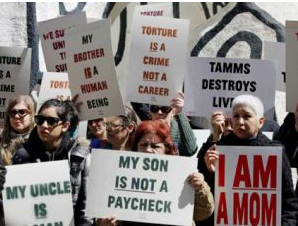
Screen Shot 2013-03-04 at 12.27.52 PMAs reported by James Ridgeway and Jean Casella in Mother Jones magazine, “On January 4, the Tamms Correctional Center, a supermax prison in southern Illinois, officially closed its doors. Tamms, where some men had been kept in solitary confinement for more than a decade, was notorious for its brutal treatment of prisoners with mental illness—and for driving sane prisoners to madness and suicide. The closing, sought by human rights and prison reform advocates was vociferously supported in demonstrations outside the prison’s gates ( for Mother Jones article, click on image on left photo image on the left).

What was surprising was the fierce opposition of big labor, even when all staff was promised continued state employment.The major force holding up the closure of  was the American Federation of State, County, and Municipal Employees (AFSCME), which, according to its website, represents 85,000 corrections employees nationally (as well as a total membership of1.6 million members. As well described in the Mother Jones article, prison unions and their partners in big labor have taken a more and more aggressive stance against prison closures. The article holds out some hope that the fissure between labor and prison reform cn be closed.


© 2007 -  Reentry Court Solutions. All Rights Reserved.


Reentry Court Solutions Powered by Communications Team