
California Plans for smaller, less expensive prison system

April 30, 2012

The California Department of Corrections and Rehabilitation (CDCR) has announced its intention to reduce the number of prisons, stop construction of planned prisons, and return California prisoners from out-of-state prisons. They base their plan on the continued reduction in state prison populations (already approximately 22,000), that has resulted from the shifting of less serious offenders from prison to county facilities (see SF Chronicle article on Facebook feed on left)

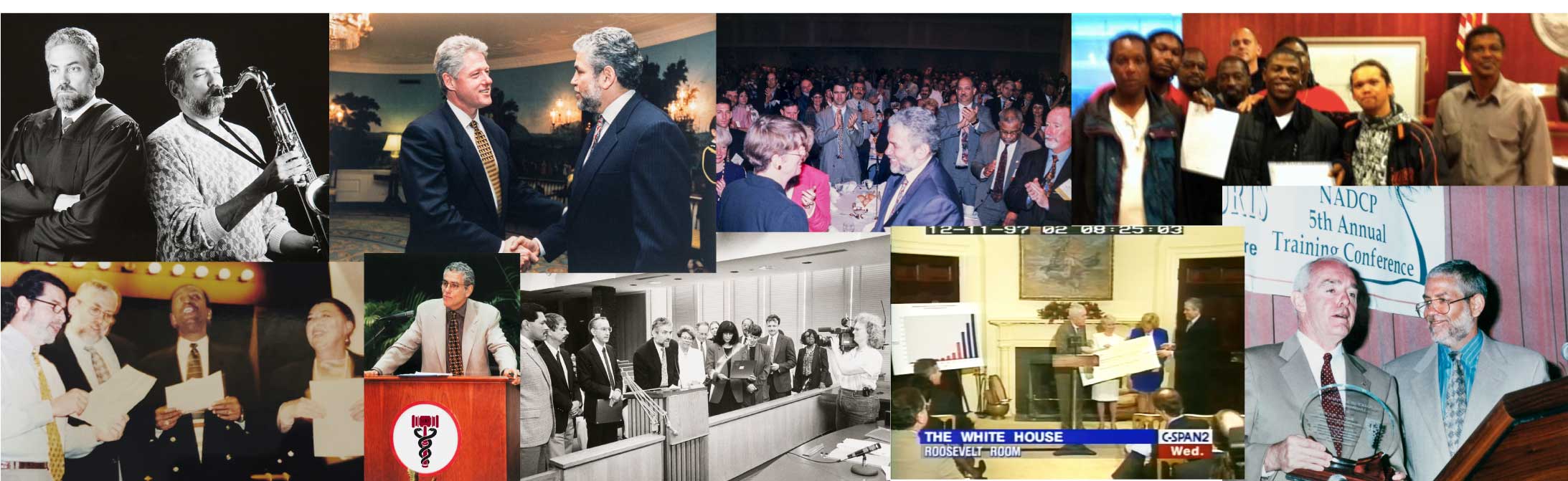
According to CDCR Secretary Mathew Cate (photo on left),

CDCR’s plan will:

  • Reduce CDCR’s annual budget by more than $1.5 billion upon full implementation, including $160 million dollars in savings from closing the California Rehabilitation Center;
  • Eliminate $4.1 billion in construction projects that are no longer needed because of population reductions;
  • Eliminate $2.2 billion annually that would have been spent had Realignment not been implemented;
  • Return all out-of-state inmates to California by 2016 to bring back jobs and manage offenders closer to home while saving millions in taxpayer dollars;
  • Satisfy the U.S. Supreme Court’s order to lower the state’s prison population;
  • Satisfy the federal courts that CDCR has achieved and maintained constitutional levels of medical, mental health and dental care to avoid costly oversight

(For a complete description of the plan and Secretary Cate’s Statement, click here)

The CDCR Plan is not without it’s critics. In a L.A. Times article (click here), Emily Harris of Californians United for a Responsible Budget, said that it’s “not really a bold vision in any way… the state should be paroling more inmates and easing criminal sentences, which would help lower the prison population further”.
Systemic Approaches to Sentencing: Part 4

 April 23.2012

Judge-Driven Sentencing Systems: Part 4

Sometimes it’s important to restate the obvious. The courts are the traditional place for sentencing and monitoring the supervision of offenders under their jurisdiction. Judges have husbanded those powers like no others. It’s therefore somewhat disquieting to find some states turning sentencing jurisdiction over to other agencies of government, even ones that are considered partners within the criminal justice system.

Nearly twenty years ago, when “Drug Courts: A Judicial Manual”, was published (JTauber, California Center for Judicial Education and Research,1994), it was noted that future drug courts (and ostensibly other courts modeled after drug courts) would need  to create fully integrated systems centered on the court, to create  the next generation of effective drug courts.

But even in a system built on collaboration and partnership, it was noted that “The courts stand in a unique position among service agencies; they are at the fulcrum, where agencies meet. Participating agencies are used to working closely with or under the supervision of the courts” (p.29).

Two decades later, whether applied to drug abuse or recidivism, those words hold true. Drug Courts and other special courts have proven the efficacy of judge-driven problem-solving courts.  Handing over sentencing and/or monitoring of community supervision to probation or parole, custody or community-based agencies, isn’t smart or efficient, or cost-effective. Special Sentencing Courts need to work closely with their criminal justice and community partners, but also need to remain the focus of that circle of intervenors, retaining final control over the sentencing and supervision of the felon.

The next segment will look at the importance of creating  sentencing tracks.

Conflicting Views on California Realignment

April 23, 2012

Depending on who you talk to, you will get very different views on the success or failure of California Realignement. Known as AB109, the Reform Act has reduced the number of California prisoners by more than 20,000 since its inception in October of 2011. By that definition, it clearly has achieved its intended goal of bringing down California’s prison population to limits set last year by the U.S. Supreme Court . The beds have been removed from prison gymnasiums (see photo on left). The issue being hotly debated across the state is the cost of doing so.

According to the California Department of Corrections and Rehabilitation, there has been a reduction in the number of persons who have recidivated in Los angeles County since AB109 began.  “Before realignment, California had a 67 percent recidivism rate. That means almost seven out of every 10 people we let out came back to us (within a year).” Los angeles County now reports a 25 percent recidivism rate over the initial six month period – or about 50 percent when figured at an annual rate (as reported 3/28/2012).

On the other hand, the Sacramento-based, “Criminal Justice Legal Foundation” (CJLF) claims offenders who now qualify for local jail or treatment under AB109 are already being arrested for new felonies, including violent crimes. CJLF President Michael Rushford said these reports are just the beginning. “Just six months since the rollout of the new realignment law, it is already evident that California has become a more dangerous place for law-abiding people to live and work.(as reported, 4/21/12)

Clearly, there is no consensus as to how realignment is affecting public safety. And it is too early to reach any definitive conclusion. What we do know is that California is slowly reducing the number of non-violent offenders in our prisons and shifting their supervision to the counties (mostly probation). Some believe that except for the recession, Realignment would never have happened. But whatever the reason, it has reestablished community control and responsibility for the non-violent offender and opened a door to a plethora of community based alternatives to incarceration (as reported 12/20/11).


Systemic Approaches to Sentencing: Part 3

April 16, 2012

Part 3: The ‘Specialty Sentencing Court” as a Problem-Solving System


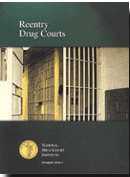
The idea that sentencing courts ought to be special and distinct entities is not a new one. There are and have been many urban jurisdictions that deal with sentencing and/or probation violations with full time specialty courts. As with the early drug courts of the 1980s, the purpose of special sentencing/probation courts is often to streamline the process and move the offender through as quickly as possible. Concern for how the offender can be best prepared for a return to community with appropriate supervision and/or treatment was and is often overlooked (click on the image on the left for “Reentry Drug Courts”National Drug Court Institute Monograph Series, No. 3, “Reentry Drug Courts”, JTauber, circa 1999).

Existing sentencing or probation courts should have the responsibility to do more. Like other problem-solving court systems, Sentencing and/or Probation Courts need to create a bond between offender and the court, that among other things, reminds both of their obligations, one to the other. Special Sentencing Court Systems need to deliver evidence-based sentencing practices, processes too complex and demanding for even the most dedicated individual judge. ( “Arming the Courts with Research: Ten Evidence Based Sentencing Initiatives to Control Crime and Reduce Costs”, a PEW monograph, Judge Roger Warren, ret.)

The best Problem-Solving Sentencing Courts will supervise thorugh separate tracks, as do most problem-solving courts in large urban jurisdictions. The Drug, Mental Health, and DUI Courts, though often presided over by the same judge, separate out the offender by the nature of the problem that the offender faces. Though the offender may have more than one serious issue, different problems call for different resources, information, staffing and treatment.

The Veterans Court provides a particularly good model for the Sentencing judge in smaller jurisdictions The Veterans Court has relatively few participants (typically less than 50), and is able to deal with the “Whole Person”. An individual is directed to the Veterans Court because he or she is faced with a criminal case, not because they have a particular issue or problem. The Veteran’s Court is prepared to deal with any and all issues facing the Veteran. To that extent, the Veteran’s court is a particularly good model for a “sentencing court”. The Veterans court mets out appropriate responses, as  a sentencing courts should, dealing with many different issues, and providing the appropriate supervision and services as required.

 The next segment will look at the importance of the judge in sentencing and monitoring supervision

“Second Chance” Solicitation for Statewide Recidivism Reduction

April 16, 2012

The Bureau if Justice Assistance (BJA) has announced a solicitation available to states interested in reducing statewide recidivism. This program will assist states in developing and implementing comprehensive plans to reduce statewide recidivism rates. Applicants must be state departments of corrections to be eligible and the deadline is May 21, 2012.

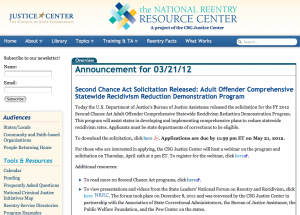
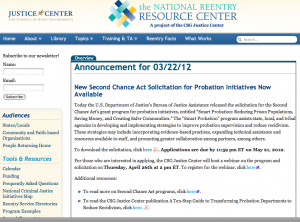
That is an important, though perhaps obvious point to make. Prison reform may be encouraged and supported by local jurisdictions, but significant changes can only come from the state and thorugh state policy makers. (Council of State Governments’ Reentry Resource Center information on this solicitation can be accessed by clicking on facimile on the left)

Systemic Approaches to Sentencing: Part 2


April 9, 2012

Part 2: The Single Sentencing Court Team Concept:

One common feature that should define the Systemic Sentencing Model, is that the same judge and court team deal with the sentenced offender (to the extent possible), as part of a seamless supervision, treatment, and rehabilitation system, that runs from sentencing, through custody, through community supervision. The first of such systems go back more than 20 years to the dawn o the Drug Court era. It was widely understood that the sentencing and supervision of drug offenders was dysfunctional. There was little coordination in the court’s dealing with the drug offender, the offender rarely saw the same judge or court personnel twice, and there was little system accountability and therefore far too little offender responsibility and compliance ( Drug Courts: a Judicial Manual, J Tauber, California Center For Judicial Education and Research Journal, Summer 1994)

We still live in a largely uncooperative world of competing government departments, uncollaborative programs and agencies, and weak sentencing follow-thorugh by the courts and relevant agencies. As noted in Part 1, its unrealistic for individual courts to develop the  advanced capabilities necessary to develop evidence-based sentencing practices (“Arming the Courts with Research: Ten Evidence Based Sentencing Initiatives to Control Crime and Reduce Costs”, a PEW monograph, Judge Roger Warren, ret; click on image).

What is necessary, is for a jurisdiction to focus a single judge and court team (or in a larger jurisdiction, a dedicated cadre of judges and staff) to the task of applying evidence based practices to sentencing courts. There is no reason to use a different approach or rationale than that developed and successfully applied to drug courts and other problem-solving courts across the nation. A sentencing court’s effectiveness ultimately depends on a jurisdictions willingness to provide a rational, system-wide, coordinated  approach to sentencing (It could be argued that much of the success of Hawaii’s PROJECT HOPE, rests on its systemic approach to felony probation supervision).

Some may feel it unnecessary for all felony sentencing and/or supervision to be handled by a problem-solving court. The advantages already described in such a system make it a very attractive alternative to the current somewhat haphazard process. What may be more surprising is the potential for savings to the court. Because the sentencing system will look to a validated risk/needs assessment tool to assist its sentencing decisions, it will be possible to create sentencing tracks for low risk/low need offenders that involve minimal resources and staff, allowing what limited resources that exist to be applied to high risk offenders with the greatest need and potential for harm.

In fact, low risk offenders may not be actively supervised by the court at all, after the individual makes a single supervision appearance before the judge after sentencing . On the other hand, a high-risk offender with a history of violence may be required to have weekly contact with the court and extensive contact with supervisory agencies  and rehabilitative programs, over an extended period of time.

The next segment further analyzes the needs of a “special sentencing/probation court”


Part 1: Systemic Approaches to Sentencing

 Part 1: Evidence-Based Sentencing Practices

Last week I wrote an article suggesting  the need for “Systemic Approaches to Sentencing” . On re-reading, I felt that the topic needed a more comprehensive explanation. So this is the first of a series of articles dealing with the need for systemic approaches to felony sentencing. In 2009, the PEW Center for the States published an excellent treatment on Evidence Based Sentencing Practices (EBP), authored by Judge Roger Warren (ret.), President Emeritus of the National Center for State courts,“Arming the Courts with Research: Ten Evidence Based Sentencing Initiatives to Control Crime and Reduce Costs” (click on the figure on the left for copy of article).

To summarize, nearly all sentencing courts are in essence, reentry courts (or court based reentry systems), and ought to be structured to facilitate the ultimate return of the offender to the community as a non-recidivist, productive citizen.

According to the PEW Monograph, every sentencing ought to take into account the most recent research, described as Evidence Based Practices (EBP). Those sentencing principles, (as described by the PEW Monograph) state that (1) Reduced Recidivism should be an immediate goal of sentencing, (2) Recidivism Reduction Options be available to the Court, (3) Sentencing be based on Risk/Needs Assessments, (4) Community Corrections be Evidence Based, (5)  Services and Sanctions be integrated, (6) the Court be aware of Available Sentencing Options, (7) Court Officers be trained in EBP, (8) Court responses to probation violations be immediate, certain, consistent and fair, (9) Court hearings be used to provide incentives to motivate Offender Behavior Change, and (10) the Court Promote Collaboration among Criminal Justice Agencies.

Clearly, individual judges and courts will have have difficulty implementing many of the proposed initiatives.  Only a systemic problem-solving approach is likely to successfully implement “Evidence Based Sentencing Practices”. (PEW declares as much on page two of the monograph; “the failure of mainstream sentencing policies….. has motivated  many state judges, prosecutors, and corrections officials to establish specialized ‘problem-solving’ courts over the past 20 years to reduce recidivism”). Expecting individual judges to independently develop the resources, skills, and competencies to become proficient in Evidence Based Sentencing Practices is unrealistic.

That does not mean that every court needs to have the same level of resources, staffing or sentencing options. The question for most jurisdictions is what level of Evidence Based  Sentencing Practices can they incorporate into their court, and that is appropriate for their community. A judge in a rural jurisdiction will have vastly different sentencing needs than a city with dozens of judges. And a low risk offender will have a very different relationship with the court than a high risk offender or an offender with a violent history.

Second Chance Act Juvenile Offender Reentry Program Solicitation

April 2, 2012

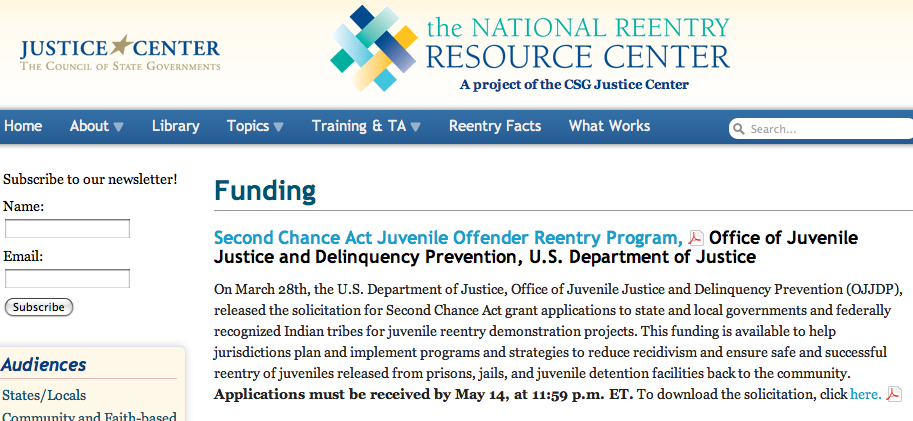
The Office of Juvenile Justice and Delinquency Prevention,  of the U.S. Department of Justice, is offering a solicitation  for Second Chance Act grant applications to state and local governments and federally recognized Indian tribes for juvenile reentry demonstration projects. This funding is available to help jurisdictions plan and implement programs and strategies to reduce recidivism and ensure safe and successful reentry of juveniles released from prisons, jails, and juvenile detention facilities back to the community. The deadline for applications is May 14, 2012. (You can find out more by clicking on the “National Reentry Resource Center” webpage facimile on the left)

NADCP Conference highlights Reentry Track and Training

The NADCP Conference to be held at the Opryland Hotel in Nashville, Tenessee, May 30 through April 1, will provide information and training through 23 workshop tracks at the Conference (click here for Registration Information)

Reentry Courts and other court based reentry sysytems will have its own six workshop tracks (N0. 13) at the conference (as well as a half day training on Front End Reentry Courts on May 30th).

The following Reentry Court Workshops will be featured at  the NADCP Annual Conference in Nashvillle:

[click on schedule below to enlarge]


*Click here for agenda of NADCP Conference

California Needs Systemic Approaches to Sentencing

Mar. 25, 2012

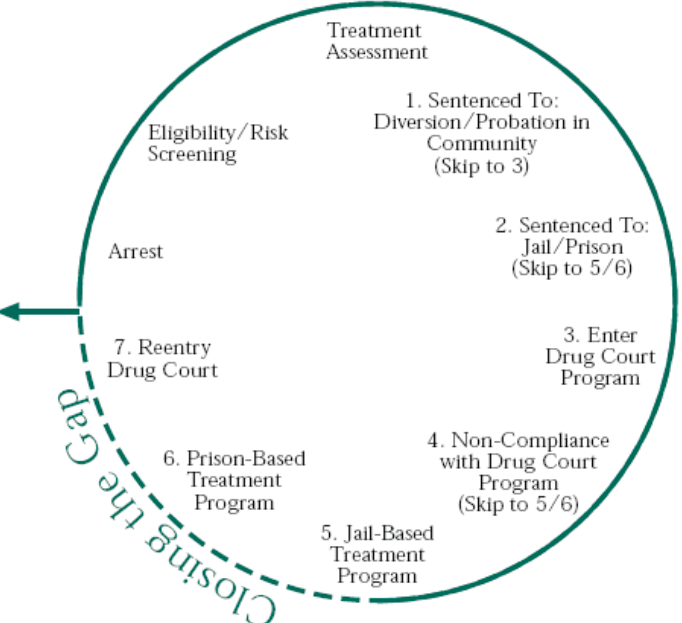
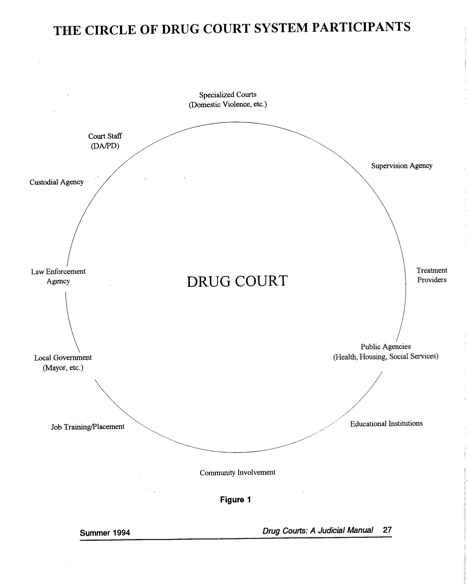
An ACLU Report (described in two articles in the Face Book Column on the far right),  points to the failure of California’s Realignment Plan (under AB109), to provide incentives to counties that reduce the numbers of persons incarcerated in county jail. The report describes the  state’s dismembering its Prison-Industrial Complex, while supporting the development of a Jail-Industrial Complex. It’s argues that counties that develop successful “alternatives to incarceration”, and/or send a small percentage of non-violent offenders to prison are penalized as proportionally larger funds are provided to counties that  have neither adequate jail facilities or effective alternatives to custody. The counter argument is a simple admission that counties that have not used alternatives in the past and relied heavily on state prison to house less serious offenders, need immediate resources to build an infrastructure capable of working with the returning offenders, both in and out of custody (on the left; a systemic sentencing circle, JTauber, circa 1999, National Drug Court Institute Monograph Series, No. 3, “Reentry Drug Courts”)

California needs to deal both with the lack of adequate jail resources, while creating incentives for counties to develop alternatives to incarceration. One way to accomplish that, is to develop effective risk/needs assesssment tools that can distinguish between those who are a violent and/or high-risk offenders and those who do not pose a danger to the community. Risk/Needs Assessments, once validated, provide an scientific basis for determining the risk of offenders to the community. Working with such tools, a county’s criminal justice system ought to be able to create a systemic approach to the convicted offender, that provides appropriate sentencing tracks that reflect an offender’s degree of risk as well as their criminogenic needs. In the future, counties that develop effective sentencing systems, used in the supervision and rehabilitation of felons, that reduce the jail population, ought to receive substantial financial incentives from the state ( California already has a successful state program that rewards probation departments for reductions in probationer recidivism)

We have developed evidence based practices for the sentencing of offenders (based on voluminous research), but are still reticent to apply those practices where they will do the most good, in making sentencing decisions. Rational approaches to sentencing that provide different levels of supervision, treatment, rehabilitation, and assistance for felons are attainable and in effect in some states and jurisdictions (more on that later).


“Second Chance Act” Probation Solicitation Announced

Mar. 5, 2012

“The Second Chance Act” Solicitaition, entitled, “Smart Probation: Reducing Prison Populations, Saving Money, and Creating Safer Communities.” has been announced by the Bureau of Justice Programs (BJA), with a deadline for Applications of May, 21, 2012.

The solicitation itself is aimed at probation agencies and therefore are directly related to (and in many cases subordinate to) the courts. This is a solicitation that the courts ought to be involved in as partners with probation agencies. Note a separate “Second Chance Act” Solicitation, entitiled “Adult Offender Comprehensive Statewide Recidivism Reduction Demonstration Program” is aimed specifically at State Departments of Corrections, and less likely to invove the courts.

[To access the “Probation Solicitation” and learn more about its details; click on the National Reentry Resource Center (NRRC) facimile on left]


Yes; “Second Chance” Grants Are Available to Reentry Courts

Mar. 19, 2012

Three BJA “Second Chance Act” Demonstration Solicitations

If you’ve read the three “demonstration Grant” Solicitations under the “Second Chance Act, you’ll find little mention of the courts.  The funds referenced in last weeks article (“Three Second Chance Solicitations”), appear to primarily target state or local government agencies. That would appear to eliminate involvement of individual courts themselves (at least as to the “Planning and Demonstration Solicitation” where there is no reference to courts at all). But there’s no reason that an individual court  should not be a beneficiary, along with the rest of the community, from resources made available through the “Second Chance Act”.

Note the language in the Solicitation (Second Chance Act Adult Offender Reentry Program for Planning and Demonstration,  Projects; p.4)

“Within the context of this initiative, “reentry” is not envisioned to be a specific program, but rather a process that begins when the offender is first incarcerated (pre-release) and ends with the offender’s successful community reintegration (post-release), evidenced by lack of recidivism”.

There is little reason to believe that that language can be satisfactorily applied without the participation of the courts. The court sentences the offender to custody and has supervisory responsibilities for the returning offender in many cases (from jail and/or prison). So if you have a reentry court, or wish to involve your court in a community based reentry system in your locality, you have the right and even the obligation to do so.

Each Solicitation requires that the community develop a “Reentry Task Force comprised of relevant state, tribal, territorial, or local leaders and representatives of relevant agencies, service providers, nonprofit organizations, and other key stakeholders” (see Solicitation, p.5). With the understanding that the courts will not likely be the applicant nor the direct receiver of funds (at least as to “Planning and Demonstration Projects”), courts need to be “key stakeholders”, who benefit, along with the community, when resources are made available to felons under the court’s supervisory authority.


Held Over 2nd Week: Get To Know the NRRC

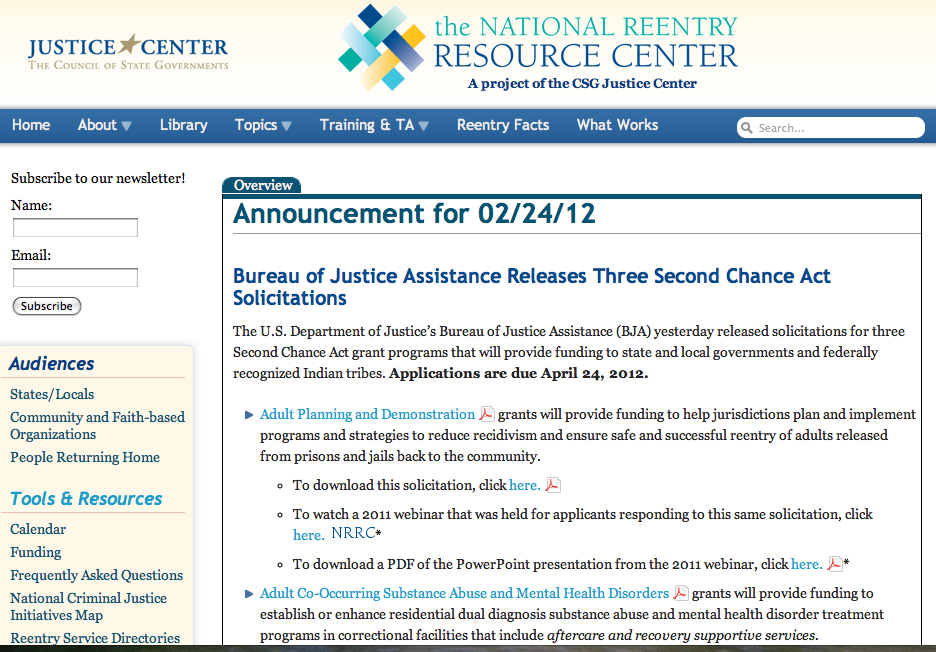
I printed the announcement below because it’s important for you to know about funding opportunities available through the “Second Chance Act”, but also because you need to become familiar with the National Reentry Resource Center (NRRC), and its parent organization, the Justice Center of the “Council of State Governments”. Partly it’s because, the National Reentry Resource Center provides the most comprehensive and up to date information on reentry issues. But there’s another very good reason.

The Council of State Governments represents state governments, as well as their views. It should be obvious that decisions made by state policy makers have a critical impact on state-wide reentry systems. If the courts are to become partners in those reentry systems, it will be because of decisions made at the highest state policy-making levels.  Ultimately, we need to partner with organizations that represent state governments (like CSG), to make our case for reentry courts to the states. [to see NRRC’s website, just click on facsimile on left]

Bureau of Justice Assistance Releases Three Second Chance Act Solicitations

The U.S. Department of Justice’s Bureau of Justice Assistance (BJA) yesterday released solicitations for three Second Chance Act grant programs that will provide funding to state and local governments and federally recognized Indian tribes. Applications are due April 24, 2012.

  • Adult Planning and Demonstration grants will provide funding to help jurisdictions plan and implement programs and strategies to reduce recidivism and ensure safe and successful reentry of adults released from prisons and jails back to the community.
    • To download this solicitation, click here.
    • To watch a 2011 webinar that was held for applicants responding to this same solicitation, clickhere.*
    • To download a PDF of the PowerPoint presentation from the 2011 webinar, click here.*
  • Adult Co-Occurring Substance Abuse and Mental Health Disorders grants will provide funding to establish or enhance residential dual diagnosis substance abuse and mental health disorder treatment programs in correctional facilities that include aftercare and recovery supportive services.
    • To download this solicitation, click here.
    • To watch a 2011 webinar that was held for applicants responding to this same solicitation, clickhere.*
    • To download a PDF of the PowerPoint presentation from the 2011 webinar, click here.*
  • Family-Based Substance Abuse grants will provide funding to establish or enhance residential substance abuse treatment programs in correctional facilities that include family supportive services.
    • To download this solicitation, click here.
    • To watch a 2011 webinar that was held for applicants responding to this same solicitation, clickhere.*
    • To download a PDF of the PowerPoint presentation from the 2011 webinar, click here.*

Applicants proposing to incorporate a “Pay for Success” model into their reentry program will receive priority consideration. To learn more about the “Pay for Success” model, please register for the Pay for Success and the Department of Justice’s Second Chance Act Solicitations webinar.

  • Date: Tuesday, March 6
  • Time: 1:00-2:00 p.m. ET

During the webinar, representatives from the Nonprofit Finance Fund will provide background on the Pay for Success concept; and BJA officials will discuss how to tailor your application to include a Pay for Success component. To register for the webinar, click here.

*These 2011 webinars and presentations are relevant for applicants responding to the 2012 solicitations.

[click here: with full credit to the National Reentry Resource Center for use of their text and website facsimile]

NADCP convenes “Reentry Court Standards” Committee

Mar. 12, 2012

Twenty experienced criminal justice practitioners and policy makers met at NADCP offices in Alexandria Virginia over the past weekend, to review best practices and procedures of Reentry Courts across the nation. The three day session was led by NADCP Board “Reentry Court Committee” chairman, Keith Starrett, (depicted in picture on the right). Judge Starrett is the Federal District Court Judge in Hattiesburg, Mississippi and runs the first Federal Reentry Court in in the nation, established over six years ago (click here for additional information)

The committee was also led by Justice Ray Price of the Missouri Supreme Court, Judge J. Fulton of the Norfolk VA reentry court, and John Marr, a pioneer of the reentry court movement. The committee made substantial progress in laying out the major concepts of Reentry Courts and will continue to work on the document in the coming months. It’s expected that there will be a session on “Reentry Court Standards”, presented at the NADCP National conference in Nashville on May 31st (the NADCP Conference runs from May 30 to June 2; more on that shortly).

Cal AB109 forces Counties to Care for their Own

Mar. 5, 2012

The two articles posted on my Facebook Page ( California Prisons Address Overcrowding, Remove Last Of Nearly 20,000 Extra BedsCalifornia prisons clearing out – sacbee.comfound to immediate right), speak volumes about the success of California’s prison reduction plan. Known statewide as AB 109, the realigment strategy returns what are called “triple nons” (non-violent, non-serious, non-sex-offenders) to local jurisdictions to deal with. It also requires local courts to sentence the same basic low risk offender class to local custody or alternatives to incarceration. The result has been the elimination of temporary beds and a reduction of almost 20,000 state prisoners since October 1st when the new law took effect.

Vilified by many California criminal justice professionals, it is clear that Governor Brown’s strategy is working and for all the right reasons. Critics argue that we are returning prisoners to counties that are unable to keep them incarcerated them and therefore risk releasing them into the community. And that is the point. If local communities and their judiciary wish to incarcerate an offender for a protracted period of time, it should be their burden, finacially and otherwise, not the state’s.

Consider what has been the existing system in California and elsewhere. Counties with limited jail facilities and financial resources have dumped tens of thousands of sentenced felon into the state  prison system. Between 1970 and 2006, the California Prison system increased more than 700%, largely because counties could send unwanted anti-social offenders out of county for long prison terms, the longer the better. Looking at a Callifornia Department of Corrections and Rehabilitation documents, largely rural and financially strapped counties send the highest percentage of offenders to prison, and of course that is the problem.

What the Governor’s plan has done, is force local communities to accept responsibility  for their own less serious felons (once again, those who are in triple non status), forcing them to sentence offenders to more appropriate terms of incarceration and releasing those into the community who pose the least danger to the community. What is missing from this successful equation, is a court-based rehabilitation sysytem, that could seamlessly reintroduce offenders into the community through supervision, monitoring, and rehabilitation services that would give the newly released offender the opportunity to successfully reintegrate into the community.

© 2007 -  Reentry Court Solutions. All Rights Reserved.


Reentry Court Solutions Powered by Communications Team