President of the American Judge’s Association Speaks Out

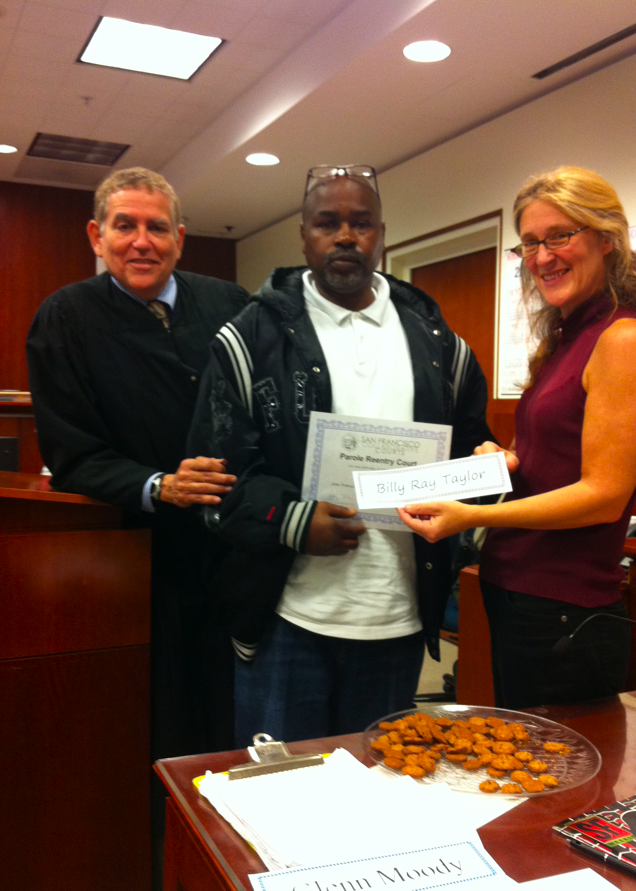
Judge Kevin Burke, president of the American Judge’s Association, recently wrote a blog describing “the closing of the highly successful San Francisco Parole Reentry Court”. He wrote his blog, “San Francisco Reentry Court: May it Rest in Peace”, after reading a New  York Times article describing the closing of the Reentry Court  (see “Parole and Probation Courts in San Francisco are Closing After Budget Cuts” ). Judge Burke commenting on that New York Times article, wrote, “The story speaks volumes about two things: (1) budget cuts to courts have real consequences and (2) there are emerging new ways that courts can reduce recidivism.

Let me speak to Judge Burke’s first point. In times of adversity, it is the problem-solving courts that are the first victims of cost-cutting. The argument, of course, is that the programs cost too much in resources and staffing. It’s an argument that has been debunked by numerous studies done on drug courts and other problem solving courts over the last twenty years (A recent national study by the Urban Institute found that for every $1 invested in Drug Court, taxpayers save as much as $3.36 in avoided criminal justice costs alone. When considering other cost offsets such as savings from reduced victimization and health care service utilization, studies have shown benefits range up to $12 for every $1 invested). It simply is no longer acceptable to cut one of the most beneficial, but least political aspect of the courts. Resources must be found to sustain and expand these critical programs.

Some argue that the case for reentry courts is less than compelling. That dealing with parolees and ex-prisoners is an executive and not a judicial function, and that they are best left to the jurisdiction of Corrections and Parole. But courts in California, as well as other states are getting into the prisoner supervison business,whether they like it or not. In California, legislation took effect last October, requiring county courts to sentence offenders (who would have previously been sent to prison) to county jail and then to supervise them in the community. States like California ( and those that will surely follow), now have the jurisdiction and the responsibility to rehabilitate and supervise the high-risk offender that are under their jurisdiction.

As San Francisco’s Reentry Court Judge over its fifteen month demonstration period, I have my own perspective on these issue. We recognized the danger and attempted to limit court costs. We reduced staffing to a bare minimum, using a retired part-time judge and clerk, and doing without a district attorney and a reporter (except when requested by defense counsel). We held drug relapse, cogntive therapy and other program sessions in the court building and in many case, the closed courtroom itself to reduce administrative costs ( “A minimalist reentry courts for recessionary times”). After our best efforts at reducing costs, we were still closed when the budget was cut.

What’s is of greatest interest, is Judge Burke’s second point; “there are emerging new ways that courts can reduce recidivism”. The success of the San Francisco Parole Reentry court has been documented (One Year San Francisco Reentry Court Report Card). The real success of reentry courts lies not in their cost savings, but in their  potential for salvaging damaged lives, restoring them to their communities and families, and preventing their future “return to prison”. The thing to keep in mind is that there are new ways for the court to deal with the returning prison offender, and that we have a moral obligation to investigate, develop, implement, and evaluate those court-based alternatives, as we have so successfully done in the past for drug courts.
The 3Cs: Community, Corrections, and the Courts

Feb.20,2012

If there is one principle generally accepted in prisoner reentry reform, it is that collaboration between criminal justice partners is critical. Certainly, that has ben the finding of researchers evaluating the importance of collaboration in drug courts as well as other problem-solving courts. The research suggest that we leave stakeholders out at our peril.

A recent Harvard Law School article, (“Designing a Prisoner Reentry System; Hardwired to Manage Disputes”,123 Harv. L. Rev. 1339 (2010) makes this very point, in advocating for “Reentry Court” as the better way of dealing with returning prisoners. The truth is that the Courts may be at the table as reforms are designed, but they are largely absent as collaborators in reentry reform itself.

It is suggested by some, that the courts don’t belong in the reentry reform structure; that prisoner reentry is an executive function and not a judicial one, that the courts have little or no jurisdiction or statutory authority to be part of the process, and more pointedly, that involvement of the courts would violate the constitutional separation of powers doctrine. On more practical grounds, they argue that courts are too expensive, involving too many stakeholders, resources, and personnel. Finally, it is argued that there is no need for the courts, as the needed reforms are already being implemented, by the required partners:  Corrections and the larger Community (with its many resources and institutions, including religious and non-profit organizations).

Somehow, those arguments are less than compelling, when considered against the reality of prison recidivism. Corrections have been a disappointment in their attempts to rehabilitate the returning prisoner. According to that same Harvard Law Review article quoted above, “Approximately six out of ten prisoners released from prison this year will be rearrested within two years [2008]”. Even where Community has been included as a partner (with all its resources), there is little reason to expect substantially better results. The  federally funded SVORI project (Serious & Violent Offender Reentry Initiative) was the largest demonstration project of its kind, distributing over $100 million in grants, to 16 sites in 14 states nation-wide, providing comprehensive, coordinated services to prisoners, both pre- and post-release. Evaluation results after the two year demonstration period (2004-2006) are generally characterized as having little impact, showing minor improvement in re-arrest rates, but higher re-incarceration rates.

Given the weakness of existing prison reentry reform models, there is a great deal to gain by bringing the courts into  the evolving collaboration between Corrections and Community. Drug Courts and other Problem-Solving Court have already proven the effectiveness of judicial involvement in collaborative criminal justice systems. Shouldn’t the courts be part of one of the most critical reforms in the history of the criminal justice system — the return of the prisoner to their community?  It’s time to bring the third “C” – Courts – to Prison Reentry Reform.

Understanding Court-Based Reentry Systems

Feb. 5


INTRODUCTION

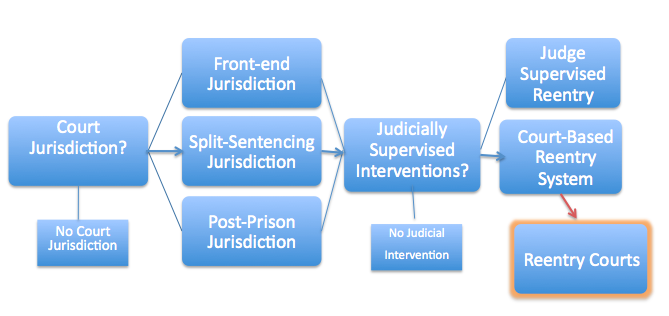
State court or Judicial connections to prisoners and ex-prisoners are much more common than generally believed, among the 50 states. State courts typically have some jurisdiction to intervene in prisoner reentry into the community, but rarely use that authority. Furthermore, relatively few such connections are organized into a systemic program that coordinates court or judicial intervention with community and correctional intervention.

While reentry court may be the best known of court based reentry systems, there are other systemic connections that exist between the court and prisoner/ex-prisoners, that have a substantial impact themselves or hold the potential for such an impact.

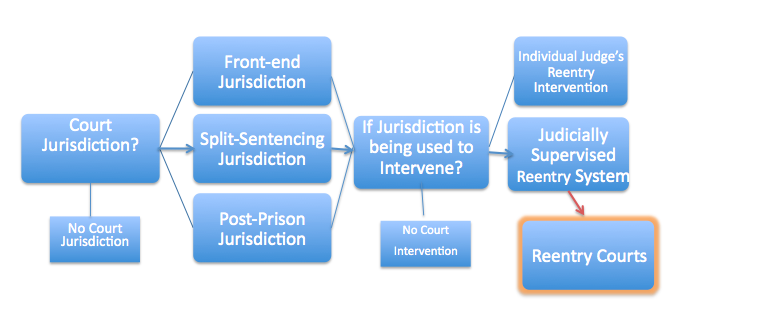
The “Court Jurisdiction Chart” is designed to help you analyze whether your state has the potential for a Court-Based Reentry System (or Judicially Supervised Reentry System) and/or Reentry Court [Note: the chart is explained below]


[An explanation of this chart can be found in the full article; click here:Judicially Supervised Reentry Interventions]


New York Times Article on San Francisco Reentry Court

The New York Times published the following article on Sunday, October 8, 2011, on the closing of the highly successful San Francisco Parole Reentry Court. (see:  “Parole and Probation Courts in San Francisco are Closing After Budget Cuts” )

The San Francisco Parole Reentry Court was part of a six county statutory pilot program, that gave the San Francisco Superior Court jurisdiction and authority for the first time to determine parole conditions, including rehabilitation and supervision as well as sanctions for parole violations. It was not an easy program to start, because of the reluctance of many to take on the supervision of parolees (an executive function in California and most of the states). As it turns out, we were merely anticipating the inevitable sentencing realignment in California, that would return a majority of prisoners to county jurisdiction.

The SFPRC enjoyed the full support of the San Francisco court until this past summer, when drastic reductions in state funding caused many California Courts to reassess their ability to provide rehabilitation services. San Francisco was one of the worst hit, with over 6 million dollars of debt and prospects of closing down 25 of 63 courtrooms countywide. The court determined that the Parole Reentry court (as well as two smaller reentry courts; a  juvenile reentry court and a probation reentry court) would be closed down, because they did not provide a core function of the court. Focusing on what they considered to be their survival as a court, the San Francisco Superior Court decided to get out of the “reentry court” business. 


Front-Loading Court-Based Interventions

Picture 8
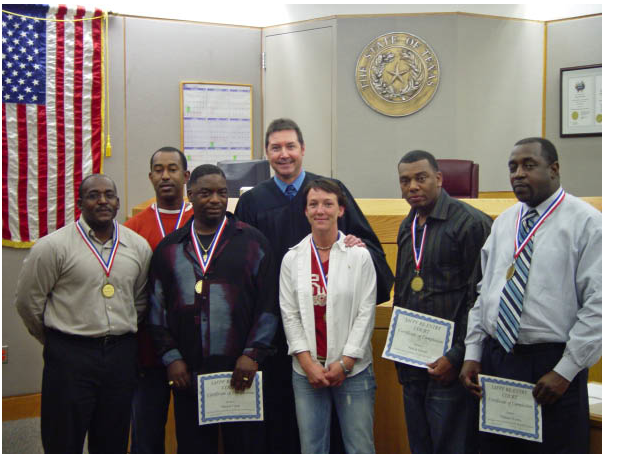
Dallas Judge Francis with graduates from the Dallas Pre-Entry Court Program

It is generally thought that the court’s have little recourse or jurisdiction to affect a prison sentence once that sentence has been announced. The truth is, that most state courts have significant jursdiction to alter, amend or modify a prison sentence. Depending on the state, jurisdiction to recall may exist for a period of one month to one year after sentencing.The most obvious purpose of a “front-loaded intervention”, is to order a convicted felon to state prison for an evaluation, assessment, or other purpose, immediately before or after sentence has been imposed.

While this power is found in most state courts, it is most often used by individual judges on a case by case basis. Some courts, in particular drug courts, will use front-loaded jurisdiction to create what can be called a “court-based reentry system” . A recent example of such a court-based reentry intervention occurred in New Mexico, where a drug court judge ordered a program violator into prison (before sentencing) for a sixty day evaluation, to be returned to court, for sentencing (see:Preentry Prison Evaluation used in New Mexico )

Similarly, jurisdiction exists in many states to recall the felon, after sentencing, for re-consideration and potential re-sentencing. The intention to recall may be announced at the time of sentence, or the decision to recall may be discretionary with the judge within the statutory period. This form of preentry intervention is often used to encourage a serious attitude change on the part of a prospective long-tern prisoner.

The judge may use their jurisdiction to sentence the felon to prison as part of a court-ordered treatment program, with the understanding that the offender is to undergo treatment before returned to court for re-sentencing. If the felon is found in compliance, the court will return the felon to a court-based probation program in the community.

The Dallas Reentry Court is a excellent example of the extraordinary innovation (and sometimes bewildering variation) among pre-entry courts, that divert offenders from a prison sentence to a probation based custodial program. What makes the Dallas SAFPF Program unique, is that its custodial segment is actually situated on prison grounds, yet program participants are segregated from the prison population, and never leave the jurisdiction of the County SAPFP Court Program.

The Texas legislature’s “4C program” provides  in-custody facilities within the prison’s outer perimeter , and uses specially trained, but regular prison guards. Although there are approximately ten jurisdictions that take advantage of “4c” facilites, Dallas is by far the largest, and the only one that has a court and judge dedicated to the reentry mission. Seventeen Dallas judges sentence drug offenders to the  SAFPF program, but when offenders finsh their in-custody treatment (typically 6 to 9 months),  they enter a dedicated Reentry Court for monitoring, continued treatment and rehabilitative services.

Judge Robert Francis, a retired judge, works full time as the reentry court judge. He and his staff take regualr trips to the “4C” facilities to check up on Dallas based offenders. Plans are in the works to reward those who do well well in the in-custody program.  Though the progam is less than a year old, 275  participants have completed the in-custody “4C” treatment program, and been released into the care and custody of Judge Francis and the Dallas SAFPF Reeentry Court,  where revocations are at an extraordinarily low 5% (Dallas SAFPF Reentry Court)

Boone County, Mo. is an example of a jurisdiction that has uses its front-loaded court jurisdiction to send drug dependent violators to prison for a period of up four months for treatment, to be returned to Judge Chris Carpenter’s Reentry Court (or what some describe as a Preentry Court), for further probation rehabilitation and monitoring in the community. Columbia, Missouri’s “Reintegration Court” is considered a Reentry Court, as it provides a comprehensive rehabilitation program, focused on the whole individual, his/her risk of recidivism,  and relies on evidence based practices after the prison term. (see: Columbia Missouri)

The above are just some of the existing variations in the courts’ use of a brief and immediate prison term, to be followed by recall to the court for sentencing or reconsideration of a sentence previously imposed. They are considered here because they are generally thought of as a successful rehabilitation strategy (and in the case of Boone County, a Reentry Court Program), designed to get the offender’s attention, assess their suitability for probation, and give them one last chance to change their behavior before a substantial prison sentence is imposed. It should be seriously considered on the program level as an alternative to prison, and as a way to reach out to large numbers of offenders that otherwise would be on their way to long prison terms.

Drug Court used as a Court-Based Reentry Intervention

Feb. 4

Drug Courts have only recently begun to meet their potential, by concentrating on the rehabilitation and treatment of the high risk offender, who otherwise would be sent to prison. The article belows, shows how one Oklahoma court is trying to use front-loaded prison treatment in lieu of long prison terms. It appears that atleast some of the prison terms imposed require the successful completion of a drug treatment program in prison (or other custodial setting) before the court will return the felon to a community-based program and probation supervision. The sentence appears to describe a Court-Base Reentry System (probably drug court based )and possibly a “reentry court”.

 (Stillwater, Okla.) — A four-time convicted drug offender from Cushing was given a 10-year prison term Friday for possessing substances with intent to manufacture methamphetamine at a Cushing apartment with three co-defendants.

Savannah Colette Hilbert, 27, who was already on probation for methamphetamine possession, has been jailed on $100,000 bond since her arrest in September by the Payne County Sheriff’s Office.

Although she was ordered into prison Friday, District Judge Phillip Corley told her in court that he would suspend the rest of her sentence on her successful completion of a drug treatment program while incarcerated.

One of her co-defendants, Christopher Sean Ward, 36, of Cushing, who was also already on probation for methamphetamine possession, was given a seven-year prison term on Dec. 13 for his role in the case. He has been jailed on $100,000 bail since his arrest.

Associate District Judge Stephen Kistler told Ward that he would suspend the remainder of his sentence on his successful completion of a drug treatment program in prison.

Another of her co-defendants, David Jesse Baxter, 26, of Cushing, who also was on probation in an earlier methamphetamine case, was placed on 15 years’ probation on Dec. 2 by Kistler, who ordered him to enroll in and successfully complete the Payne County Drug Court program. He had been jailed on $100,000 bail.

Another co-defendant, Luke Patrick Danyeur, 30, of Yale, remains free on $35,000 bail pending his preliminary hearing on Jan. 12 in the methamphetamine case.

All four were alleged to have possessed — at an apartment in the 500 block of E. Moses Street in Cushing — crystal drain opener, liquid drain opener, Coleman fuel, iodized salt, methamphetamine, a cold medication containing pseudoephedrine, an instant cold compress containing ammonium nitrate, and three lithium batteries with intent to use those substances to manufacture methamphetamine on September 26.

According to court documents, Hilbert was convicted in 2008 of three charges of possession of methamphetamine with intent to distribute, once in 2004 and twice in 2008.

She was ordered to serve 120 days in the Payne County Jail, to be transported to inpatient treatment when a bed was available, and then to serve 15 years of probation.

Last March, Ward was placed on five years’ probation with an order to enroll in and successfully complete the Payne County Drug Court program, for possessing methamphetamine in 2010 and 2011, both in Cushing, court records show.

In 2010, Baxter was placed on five years’ probation for possession of methamphetamine in Perkins with intent to distribute in 2008, court records show.

Pre-Sentence Prison Evaluation used in New Mexico

Feb.4

A pre-sentence evaluation is often used to give an offender, a failed drug court participant in particular, an opportunity to see what a substantial prison sentence would be like. The program described, appears to be part of a court-based reentry system, probably a drug court. In this instance, a New Mexico judge, ordered resigned State Public Regulation Commission member Jerome Block Jr., to serve 60 days in prison while being evaluated

A Reentry Court Judge Looks Back

Aug. 9,2011


I can write best about my own reentry court in San Francisco. I can’t compare it to any other  California Pilot Parole Reentry Court, because all six counties with pilot parole reentry courts have taken different paths. One has built its court with participants who have been been placed  on probation for new offenses and start out their program in county jail, others built their programs based on the proven track record of their other existing collaborative courts, another creates an informal atmosphere where participants are ushered into the court room personally by the judge to sit across a table from  judge and team members.

I find this a particularly good time to write about our program as we are in the tenth month of program development,  and we have learned a good deal about the reentry court process. We have chosen to build our program from the ground up, and not rely on existing structures. That has forced us to reconsider conventional drug court wisdom  and rely on our own expertise, experience, and importantly, evidence based research in building our program.

It’s also a good time to look back, because there may not be a San Francisco Parole Reentry Court, nor any California Parole Reentry Court after Governor Brown’s “Prison Realignment” on July 1st. This is  hard to accept as we have worked hard  building a program based on “evidence-based principles” and an evolving community  environment and have watched it mature into a successful reentry court model . These are difficult times for reentry courts and the california criminal justice system in general. We hope for the best.

Governor Brown’s “Prison Realignment” Plan

EXTRA/Aug 08, 2011

Governor Jerry Brown responded to a three panel Federal Appeals Court order to present its plan to reduce California’s proson population by 10,000 prisoners by Novemeber, as an intermediary step in responding to the U.S. Supreme court decision to reduce prisons by 40 ,000 prisoners by 2013 (article)

The governor’s plan relies substantially on the transfer of non-violent prisoners to county jurisdiction. While the governor claims that he can not move forward on his plan untill and unless additional funds are found to pay for the reallignment to county jurisdiction, the process is already under way.

Well informed sources report that most parole matters will shift to  county court jurisdiction as of July 1st and that $40 million has been allotted to allow county courts to take over parole revocation responsibilites. While everything and anything may change as budget legislation is finalized, it is expected that the reallignment will move forward, if slowly depending on further funding.

We can also expect that all non violent non serious offenses to be resolved with county jail sentences, and only violent offenders sent to prison. Further, that almost all parole violators will be housed in county jail and any sanctions will be facilitated through the auspices of the county probation department, adjudicated under the county court system, and sanctioned through the local county jail (or other local alternative to custody).

No one could have expected such an extraordinary change in felony sentencing, reduction in prison committments, or shift to local jurisdictions. What we are seeing is a huge sea change in how felons are dealt with by the criminal justice sytem in California. And perhaps, to emphasize the point made in the previous article (State Prison Reentry Court RFP Needs State Leadership), changes in how prisoners are handled in a reentry court will only occur when state criminal justice leaders take a strong leadership position. Although it is messy and somewhat uncertain, the movement of non-violent felons from prison to jail based supervision, is an extraordinarily important and encouraging development that should be studied and hopefully emmulated in other states.

Momentum for 3 Strikes Reform in Cal

Growing concerns with California’s out-of-control prison overcrowding is building interest in a possible reform of the state’s three strikes law. Generally considered the most drastic such law in the nation, over 80,000 second strikers and 7,500 third strikers are in prison, according to the Legislative Analyst’s Office.

In 2012, according to an article in the  San Jose Mercury News there is will probably be a proposition on the ballot to reform that law. A similar attempt fell short in 2004, but with changed circumstances expectations for success are high.

Cal Pilot Reentry Courts Point the Way

June 13th

With all the interest in California in the return of prisoners to county jurisdiction, it’s important to remember that there is already a major pilot project involving six counties providing supervision treatment and rehabilitation services to high risk offenders with substance abuse and/or mental health problems.

The six California pilot Reentry Courts have been around almost a full year and are beginning to provide evaluation data. While still very early in their development, they report very encouraging results. California reports an overall recidivism rate of 70%. Santa Clara county has been reported to have a recidivism rate of just 20%  (Santa Clara County Press Release), while San Joaquin County reports a recidivism rate of 29% (Stockton Record). Data from other counties are not available yet, but expected to be positive.

As California prepares its “prisoner realignment” back to the counties, we shouldn’t forget or neglect the promising results that the pilot reentry courts are showing and the efficacy of the reentry court model.

State Prison Reentry Court RFP Needs State Leadership

june 10th

I submit  that whatever the intent of BJA’a Reentry Court RFP, a state prison based reentry court  is not a workable structure without the full support and collaboration 0f the State Supreme Court and its executive arm, the Administrative Office of the Courts (AOC). In reality, such a reentry court  is not viable without the full support and collaboration of the state criminal justice and political leadership. That doesn’t mean that a local jurisdiction can’t apply for and be awarded a grant, but that a state parole/corrections based reentry court (as opposed to a county-based jail/probation reentry court), needs to partner with the state to be successful.

The analysis is simple: State’s are overwhemingly responsible for the control of offenders, post prison. To that end, state-wide jurisdiction is typically granted to state parole/probation agencies to oversee offenders returning to the community. In most state’s it’s called the state-wide Parole and/or Probation Agency. Traditonally, counties had little or no jurisdiciton once the offender was sentenced to state prison.  This isn’t so for any other problem-solving court. Drug, mental health,  DUI, and other problem-solving courts are often started by  local jurisdictions, sometimes without the knowledge of the state judicial or political leadership (although state collaboration and support is becoming more and more critical)

Times have changed. We’ve looked at the data and realized that a  state-wide correctional authority alone, may be too narrowly focused, and that a broader collaborative approach to the returning offender may be more successful and cost-effective. The reentry court is one such model that is being widely investigated as a new path for the returnee. But it can’t succeed without the State Supreme Court, Correctional Authority, Probation/Parole Agency, and the legislature’s collective planning, collaboration and funding. (see: Ten Prison-Based Reentry Court Models).

This RFP  is for those of you in your state government’s crimial justice leadership: It will take your good will and support of a state prison based reentry court application, and yes, your initiative to make an acceptable application under this RFP, truely successful (see article below; “ California Courts Gird for New Parole Role“)

A County Jail Based Reentry Court Grant Application

June 9th

This is one of many articles  I’ve written on the 2011 “Second Chance Act” Reentry Court RFP, in an attempt to stir interest in a major funding opportunity involving community alternatives to prison. In this analysis,  I will review the Reentry Court RFP from the perspective of a  county -jail, probation-based reentry court applicant.

Typically, when one thinks of a reentry process, the focus is on state prisoners reentering society.  While this is clearly a critical issue, the possibility of keeping the offenders in the local community , and using a substantial jail term as a last resort to prison has not always received the focus it deserves. Creating an effective county jail-based reentry court program offers the possibility of reducing the state prison population with its extraordinary costs, keeping offenders local, while increasing public safety within a seamless and comprehensive jail-based reentry court system.

Note: This solicitation is open to offenders returning from jails as well as prisons.

The pressure is on to reduce prison population in states like California. Governor Jerry Brown has committed  his new administration to implementing a major sentencing realignment that will optimally send 30,000 state prisoners back to local communities and county court jurisdiction.  The potential for dealing with offenders at an early stage of the criminal justice process (potentially at Arraignment), allowing for the seamless transitioning from jail to community, providing judicial oversight and incentives, using the same reentry court team throughout, and providing critical rehabilitation services early on, is an important alternative to prison based reentry court (see: County Jail Based Reentry Courts, a Policy Paper). An additional benefit, is that the local jurisdiction can submit an application and proceed with their planned reentry court, even in states that don’t support state prison-based reentry courts.

It’s worth repeating, that an obvious way to deal with exploding prison populations and prisoner reentry failures is to refrain from sentencing non-violent offenders to prison in the first place.

Reentry Court Track at NADCP Conference

June 8th

The NADCP Conference in July will feature a full day of workshops on Reentry Court.

The Reentry Court track that  runs five workshops on reentry court topics on Monday July 18th

We are watching a major nationwide trend develop before our eyes; state prisoners returning early and often to local jurisdictions. That pattern can be observed in states such as California where major reforms are being implemented that return parolees to local courts for supervision, parole, and revocation; and in states like Indiana, where state-wide certification already standardizes rules for existing reentry courts This track will take a hard look at how different states are implementing state-wide reentry court systems, both jail and prison based.


Workshop A: 10:15-11:30

Different State Approaches to Reentry Courts: A review of five states that have taken substantially different approaches to the use of the courts in supervising and supporting the reintegration of returning state prisoners into the community.

Moderator: Judge Jeff Tauber (ret.), San Francisco Reentry Court

California; Judge Steven Manley, Santa Clara Reentry Court

Indiana; Mary Kay Hudson, Director of Court Services, Indiana Judicial Center

Missouri; Judge Christine Carpenter, Boone County Reentry Court

New York; Chris Watler, Director, Harlem Justice Center Reentry Court

Ohio; Christine Raffaele, Program Manager, Ohio Supreme Court

Workshop B: 12:30-1:45

Evidence Based Practices in Reentry Courts: A review of the latest research based practices that make a difference in the success of Reentry Courts

Judge Jeffrey Tauber (ret.), San Francisco Reentry Court, CA

Workshop C: 2:00-3:15

The State of Reentry Courts in California:

California has taken a giant step toward the systemization of reentry courts across the state. In addition to six pilot reentry courts that have been in operation for nearly a year, Governor Brown has signed legislation that may in the near future, give county judges primary responsibility to supervise parolees and hold parole revocation hearings.

Judge Richard Vlavianos, San Joaquin Reentry Court

Judge Steven Manley, Santa Clara Reentry Court

Workshop D: 3:30-4:45

Dealing with the new demographic: Returning state prisoners

The local courts are experiencing the return of state prisoners to localities, to finish state prison terms and in some cases , to be supervised and tried for parole revocation before county judges. Learn how working with this new demographic is different.

Moderator: Judge John Creuzot; Dallas TX

Judge Patricia Cosgrove, Akron Reentry court, OH

Kathy Bush: Program Coordinator. San Joaquin Reentry Court. CA

Michael Princivalli, Boone County Missouri Reentry Court Coordinator

Workshop E: 5:00-6:15

The State of Reentry Courts in Indiana

Dealing with almost a dozen reentry courts, Indiana has the largest number of reentry courts in the nation. Additionally, Indiana is a model for developing astate wide systems that require counties to follow state wide rules. Learn from Indiana officials how a state wide, standardized reentry system works.

Moderator: Chris Watler, Director, Harlem Justice Center Reentry Court

Judge Jose Salinas, Indianapolis Reentry Court

Mary Kay Hudson, Director of Court Services, Indiana Judicial Center

Information on the NADCP Conference that runs from Sunday July 17 through Wednesday, July 20th.

Supreme Court spurs prisoner move to counties

June 7th

The U.S. Supreme Court, on May 23rd, in a 5-4 decision written by Justice Anthony  Kennedy, found that overcrowded conditions in California prisons violate the  “cruel and unusual punishment” provision of the Constitution. In a decision that is being noted across the nation, Justice Anthony M. Kennedy, described “a prison system that failed to deliver minimal care to prisoners with serious medical and mental health problems and produced “needless suffering and death.” [NY Times Article]

The Supreme Court orderred 30,000 inmates removed from the California prison system over the next two years, but did not indicate how that was to be achieved. Interestingly, Californiia Governor Jerry Brown, has recently signed reallignment legislation (that will take effect on July 1, 2011), that will make less serious felonies subject to extended county jail sentences, and less serious parolees subject to state court jurisdiction.

The coming together of the Supreme Court decision and the Governor’s reallignment policies is as close to a perfect storm as we are ever likely to see in the criminal justice system. Many states are operating under similar overcrowded conditions and subject the Supreme Court decree. There is now an opportunity to create a more rational, reasonable and effective community based sentencing policy for felons.

The most significant part of any such strategy will be the sentencing of less serious felons, anchoring them to their  communties and providing a structured system for their supervision and reintegration into the community. Such a movement of prisoners and parolees to local venues (whether they be jail sentences and/or alternative sentences), is critical to cost-effective and humane treatment of the returning offender.

It’s clearly time to create a vision of how felons can best be supervised, treated and rehabilitated, and finally returned  to being participating members of their communities.

[The Reentry Court Grant, available through BJA’S Second Chance Act would be an excellent place to begin creating that alternative vision]

© 2007 -  Reentry Court Solutions. All Rights Reserved.


Reentry Court Solutions Powered by Communications Team