President’s budget adds Reentry Court: Part I

Feb. 21st

Though many disputed the idea that federal funding for Reentry Court would survive the President’s initial  2012 budget, there it is; $5 million  for Reentry Courtsin the Department of Justice’s “Second Chance Act”. Though, in the scheme of things, not a lot of money ( and half of the $10 million allocated last year), it will continue funding of existing Reentry Court programs, and allow the expansion of Reentry Courts in exciting new ways. Most importantly, it is a statement that the Administration has not given up on Reentry courts as a model for prisoners returning to their communities.

It should be noted that there are literally dozens of states that are flailing around looking for some strategy that will allow substantial reductions in their prison populations. Reentry Courts, working with other important institutional and community partners, provides the focus necessary to integrate offenders back into the community while controlling their  criminal conduct. However, its important to note that reentry is a statewide problem, and cannot be addressed by local communities without the leadership, resources and committment of state political, judicial, and criminal justice officials. Any new federal Reentry Grant Program needs to be aimed at state government, rather than individual localities.

While it’s true that the pilot programs that are underway in a  dozen states have not been around long enough to  prove their effectiveness, drug courts have proven the effectiveness of the model in working with high-risk offenders (making up the great majority of those returning from prison). Where Reentry and other Problem-Solving Courts have missed their mark, is that they have not embraced evidence-based practices that have been  developed through nation-wide meta-analysis based research.

As a Reentry Court judge,  I am constantly reminded of the advances made in our knowledge, capabilities, and technology over the past ten years. It literally puts us on the brink of extraordinary change in the criminal justice system. All it takes is the willingness to break from the conventional, and the committment to apply what we know works (based on state of the art research) to our reentry populations. It can be done and the ride will be exhilarating.

[More on those advances next week]

Second Chance Act Reentry Court Solicitation

Feb.14th

It’s unfortunate, but funding for Reentry Courts under the “Second Chance Act” appears to be in jeopardy.  Those in a position to know, claim that few grant applications were submitted last year for Reentry Court funding, and that there appears to be little interest in these grants this year

The federal governemnt and especially the Department of Justice owes it to local communities facing the return of state prisoners to fully explore what appears to be the substantial potential of the Reentry Court. Do a Google search and note the many states that are seriously considering the return of state prisoners to local venues ( often over the strenuous objection of local officials). It would be shortsighted to consider the return of state prisoners to their communities without fully exploring the capacity of “Reentry Court ” to make that transition responsible, cost-effective, and humane.

“Second Chance” Mentoring Grants Announced

Feb.14th

On February 9, 2011, the Bureau of Justice Assistance (BJA), U.S. Department of Justice, released the solicitation for Second Chance Act mentoring grants to nonprofit organizations (Section 211). Funding under this section is available to help nonprofit organizations and federally recognized Indian tribes implement mentoring projects to promote the safe and successful reintegration into the community of adults who have been incarcerated. The deadline for applications is April 21, 2011.

To download the solicitation, click here.

To download the Frequently Asked Questions document about this solicitation, click here.

To help potential applicants respond to this solicitation, the National Reentry Resource Center will hold a free webinar on February 17, 2011 at 2:00 p.m. ET. Representatives from BJA will participate in the webinar, explaining the details of the solicitation and answering questions from applicants.

San Francisco’s Federal Court begins Reentry Court

Feb. 14

The United States District Court for the Northern District of California has announced the establishment of a reentry court program for certain individuals on federal post-conviction supervision. The first federal court will be established in San Francisco, and Magistrate Judge Joseph Spero will preside. The court will meet every two weeks. Additional reentry courts may be established in the district in the future.

For documents describing the planned court, see PDF attached.

Evidence Based Practice Packets Now Available

Feb. 7th

Reentry Court Practitioners have available to them an eleven part  education series  that enhance their ability to implement evidence based practices in their courts. The Center for Effective Public Policy and its partners, The Urban Institute and The Carey Group, developed this free educational program now available to criminal justice professionals and their partners interested in enhancing their implementation strategies.

Too often, practitioners have been  encouraged to use research based strategies such as “Evidence Based Practices”, but find the can only access highly conceptual education materials, that provide little guidance for implementation in the real world. On the other hand, each of the eleven Coaching Packets provided in this series, provides an overview of a key topic related to successful offender reentry, concrete strategies and key steps for enhancing practice in this area, and a “self assessment tool” that jurisdictions can use to evaluate their strengths and challenges in the particular topic area discussed. The packets are organized in three series:

  • Series 1 provides a blueprint for an effective offender reentry system;
  • Series 2 addresses key issues related to the delivery of evidence-based services to offenders; and
  • Series 3 provides guidance and tools to ensure that reentry efforts achieve their intended outcomes.

Though not specifically designed for Reentry Courts, I would encourage Reentry Court Practitioners to investigate this important educational series (especially the “Implementing Evidence Based Practices Packet”), and decide for yourselves.

Veteran’s Reentry Court Proposed at NADCP Meeting

At the National Association of Drug court Professionals (NADCP) Board Meeting in Nashville, Tennessee, there was a good deal of discussion regarding the future of Veteran’s Court. One informal suggestion made was that a Veteran’s Court that focused on returning offenders from prison would be an appropriate expansion of the Veteran’s court concept. There are as many as 80 Veteran’s courts across the country and those that I am aware of, work with offenders are relatively recently separated from the military, who are new to the criminal justice system, with new offenses that are often dealt with through a diversionary court.

With the continued success and popularity of the Veteran’s Court, it would seem most appropriate to consider working with those who have had long histories in the criminal justice system, many of them veterans of the Vietnam era. Those with prison terms who are returning to the community or are to be released into the society clearly deserve the same degree of appreciation and consideration as more recent veterans receive in Veteran’s Courts

I have seen various statistics on the number of veterans in prison, the most widely quoted suggests that 10% of those in prison nationally are veterans (though I can not vouch for that). I have seen reliable statistics showing that there are over 2 million veterans living in California alone. For example, I would hope that California jurisdictions who are in the process of realignment, take a look at how those veterans imprisoned and released on parole in their jurisdiction are faring and investigate how we can best serve this deserving population as they return to their communities. A Veteran’s Reentry Court may be part of the answer.

UPDATE: Ten Reasons to Build a Reentry Court in 2011

Jan 31st/ Jeffrey Tauber

Last January I published an article on the “Ten Reasons to Build a Reentry Court in 2010″. This year I revisit the theme, and rewrite the article from a very different perspective; that of a Reentry Court  Judge.

The Reentry Process is nothing new to the Drug Court Practitioner, for the Drug court has always been a reentry mechanism; a seamless process for returning the drug offender from arrest and criminal adjudication , through community-based rehabilitation and monitoring, to the offender’s reintegration into the community. What is different in 2011, is the need to build a Reentry Court for ex-offenders returning from our state prisons; a very different sort of problem-solving court. One modeled on the Drug Court concept, but far different from it; a next-generation  problem-solving court, based on the latest research and evidence based practices, and designed to work with high-risk, long-term, institutionalized offenders (and not necessarily serious drug abusers). So rather than adding  another layer of bureaucracy to your Drug Court, use your Drug Court resources in a very different way to rehabilitate and reintegrate this new population as it returns to the community. Consider the following reasons to do so:

1.       There has been a seismic shift in the nation’s attitude toward imprisonment and prisons. The entire nation seems desperately focused on the prison problem, and its financial and social costs. Conservatives, such as Newt Gingrich are pushing hard for reform that will reduce criminal justice budgets. States are casting about for ways to reduce prison populations, especially the notion of returning the non-violent prisoner back to local jurisdictions to be handled through county jail and community based alternatives (such as Reentry Court). California is just one of at least a dozen states that is moving quickly to make that change, in many cases through the budgetary process.

2.       The Drug Court has been tested, evaluated, and analyzed over the past twenty years on an unparalleled scale. The scientific community has concluded that the drug court provides the most effective means to rehabilitate, hold accountable, and reintegrate the “high risk”, non-violent, drug involved offender back into the community. ( Doug Marlowe: A Sober Assessment of Drug Court). The research on Drug Courts gives us reason to believe that the Reentry Court will work as well (or even better than the drug court) with high risk offenders.

3. According to Professor Ed Latessa of the University of Cincinatti, (Dean of reentry research), parolees (normally handled in Reentry Courts) need to be engaged in structured activity for 40 to 70% of their day, and that those programs that address four or more criminogenic needs of the offender do much better than those that don’t. Research suggests that less than 50% of those leaving prison have a serious drug problem, so dealing with substance abuse as the main focus of Reentry Court may not be effective for this population. According to the research, drug abuse is generally not in the first tier of criminogenic needs for the high-risk offender. Dealing with anti-social behaviors, anti-social behavior factors, anti-social cognitions/attitudes, and anti-social peers are generally considered more important treatment needs for the returning offender.

4.      The federal government recognizes the success of the Drug Court model, evidenced by their assistance to local jurisdictions and individual courts over the last fifteen years. The federal government must recognize that working with local jurisdictions iss a dead end when it comes to developing Reentry Courts. The federal government needs to work with state governments to make Reentry Courts work. It is clear that counties, traditionally do not have the jurisdiction, resources, or will to tackle the issues of returning state prisoners without extraordinary assistance, and resources from the states.

5.       The “Second Chance Act”, and other federal and state initiatives specifically emphasize the need for community-based “task forces”, that work collaboratively in integrating the offender into the community and sharing resources and funding streams to make the process truly a community-wide effort. More than Drug Courts, Reentry Courts need to reach out to the general community, to engage community-wide collaborations in the reintegration of returning offenders into the community.

6.       Reentry Courts represent the future of the Problem-Solving Court field; a next  generation, comprehensive Collaborative Court that works with “high-risk offenders. The Conference of Chief Justices (CCJ) and the Conference of State Court Administrators (COSCA), have endorsed problem-solving courts based on the “drug court model” on four separate occasions, since 2000, as the lynchpin of future court systems, emphasizing their effectivenesss in dealing with issues such as “recidivism”. (see CCJ Resolution 22/COSCA Resolution 4)

7.       Rather than re-inventing the wheel, the nation’s Reentry Reform Movement can take advantage of over two thousand drug courts already in existence. However, rather than adding on to existing drug courts, Reentry Court/Drug Court practitioners need to create minimalist Reentry Courts, (optimally creating stand-alone Reentry Courts) that work for the special needs of the reentering ex-offender.

8.            Reentry Courts turn out to be a very different animal than Drug Court. Its population is made up of high-risk offenders, who have been institutionalized for substantial periods of time. Parolees require far more services, incentives, and flexibility than traditional Drug Courts; that creating a community among court staff and participants is critical to parolees who have lost most sense of belonging during long years of imprisonment. A heavy-handed approach to technical violations and minor offenses (including drug abuse) does not work well with this population. Encouragement from the bench, incentives, and the creation of court-based communities provide a far more effective approach. This still requires the active engagement of the parolee in community-based activities (job training, education, volunteer service, substance abuse and cognitive behavioral treatments) from the day they enter the reentry court.

9.       Probation or Jail-Based Reentry Courts (sometimes called Pre-entry Courts) represent the simplest solution to prison-overcrowding and reentry issues. The best way to deal with jail-overcrowding and reentry issues, is not to sentence the non-violent, high-risk offenders to prison in the first place, but place those who would otherwise go to prison, under state court and probation jurisdiction, in next-generation, comprehensive Reentry Courts.  (see Reentry Court Model)

10.       While federal funding for Reentry Court increased substantially last year, it is unlikely that it will increase or even maintain last year’s level of support.  State funding for local criminal justice reform, on the other hand, has the potential of being increased extraordinarily as states attempt to reduce prison populations and their costs. Prison-based Reentry Court Systems, such as California’s Six County Parole Reentry Court Pilot Project, are being developed in a number of states. ( Ten Prison-Based Reentry Models ). With an almost zealous intensity, both progressives and conservatives are determined to reduce funding for prison and prisoners, while seemingly intent to increase funding for prison alternatives and local reentry reform. This is an opportunity for Reentry Court advocates that may not come again.
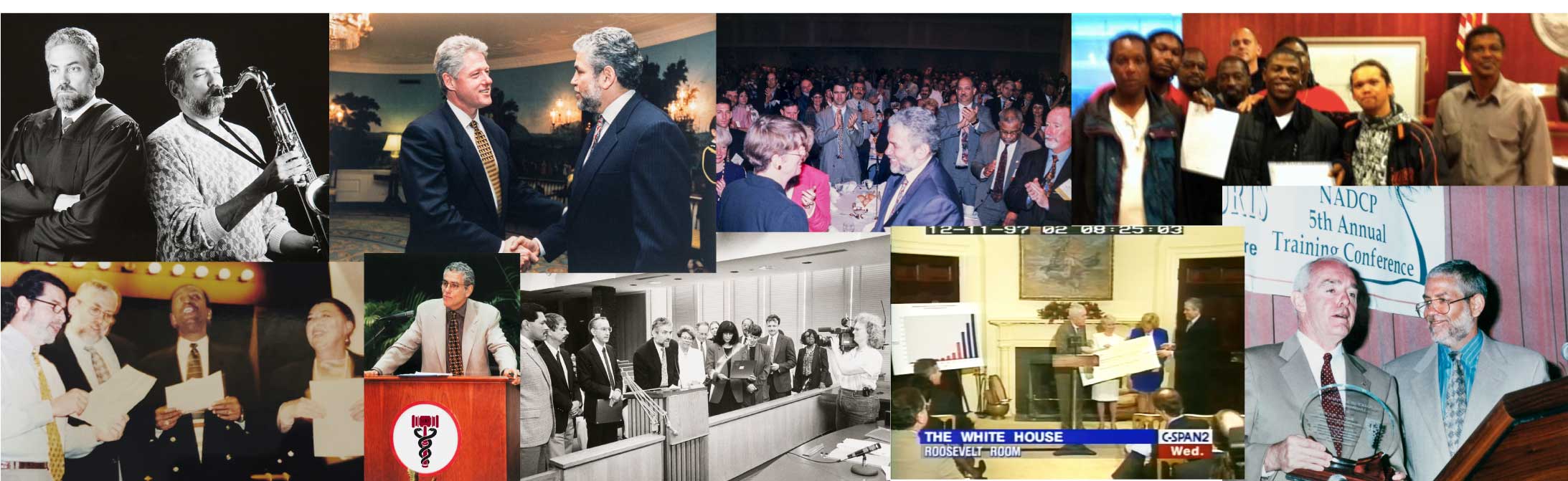
San Francisco Reentry Court Start-Up

For someone who believed he had a basic understood of Reentry Court and its parolee participants, the last six months of planning and implementing the San Francisco Reentry Court have been something of a revelation. The parolees themselves have surprised me the most with their willingness to participate in court sessions and court-ordered programs (appearing for  better than 99% of weekly court appearances). While it’s far to early to analyze the limited data,  building a core community and an expanded team within the court program itself, and creating an environment where participants feel welcome and respected, appear to be  potential factors in explaining initial parolee participation.

JTauber

Reentry Courts beckon as Cal Prisoners return?

As California, and states across the nation, contemplate the return of non-serious offenders to local counties, it may be time to seriously consider the Community-Based alternative,  Reentry Court.

Newly re-elected Governor Jerry Brown has announced his intention of returning state prisoners to county jails. According to an article in the San Jose Mercury, “Under Brown’s plan, the state would stop housing 37,000 adult convicts each year who are short-timers, low-level offenders and parole violators. Those groups instead would be held in county jails at a cost some experts say could be half the current burden…This is just an incredibly massive shift for a state system that was sending everybody and their brother to prison,” said Joan Petersilia, a Stanford University criminal justice expert. Petersilia, who has worked with two gubernatorial administrations on the change, described it as “the most significant in California history.”

This news shouldn’t come as a surprise as similar plans have been put forward in the past. But this time, it appears that the governor’s plan has a great deal going for it. The extraordinary cost of keeping non-violent offenders in state prison, an astounding budget deficit pegged at $27 Billion, and the court case before the U.S. Supreme Court, that may force California to remove up to 40,000 prisoners from its over-crowded prisons.The question for many, is whether the state will provide the funds to counties to provide the necessary treatment and other services required to successfully reintegrate offenders into their communities.

Reentry Courts are seemingly new,and not on everyone’s mind, but they should be. The six California Counties participating in California’s Parole Reentry Court  Pilot Project, having recently begun operations, are showing unusual promise. Within the next six months, we should have a very good idea as to the efficacy of the reentry court model in handling those returning from prison. It’s time to pay attention to the reentry court, based on a drug court model, that has proven itself to be the only effective community-based program for high-risk offenders.

Administration announces Interagency Reentry Council

As reported in the National Reentry Resource Center’s Newsletter, Attorney General Eric Holder convened the inaugural meeting of the Interagency Reentry Council last week. “Attending the Cabinet-level meeting were the secretaries of Labor, Education, Health and Human Services, Housing and Urban Development, Veterans Affairs, Agriculture, and the Interior; as well as the heads of the Office of National Drug Control Policy, the Social Security Administration, the Equal Employment Opportunity Commission, the White House Domestic Policy Council, and the Office of Faith-Based and Neighborhood Partnerships”.

Interestingly, last week, the likes of Newt Gringrich and Pat Nolan, right wing conservatives, were making their positions known in a Op-ED piece in the Washington Post,  favoring prison reform and reentry strategies not necessarily unlike, those of the Interagency Reentry Council.  As discussed here in the past, there is a confluence of interest across the nation (and around the world) favoring prison reform. Unfortunately it is not a movement always born of concern for the prisoners and their needs, but  one focused on the cost of keeping prisons open and  keeping prisoners in prison (when recidivism remains above 50% within three years of release).

Nevermind. It matters little how we got here, but what we’re able to do to further the agenda of real prison reform, focusing on getting the prisoner back to the community where rehabilitation is possible and where reintegration into the community is a critical necessity. Pay close attention to how the politicians work this issue and make sure that the interests of the prisoner and the community are not lost in translation.

Obama Speaks Out On Need For Second Chance

A recent phone converesation between President Obama and Eagles Football Team  owner, Jeffrey Lurie, will hopefully focus attention on the need to fund the “Second Chance Act” and “reentry courts ” as a part of that legislation. According to Eagles Football Team  owner, Jeffrey Lurie, President Obama made a point of thanking Lurie for giving quarterback Michael Vick a  second chance after his conviction and imprisonment for a year and a half for running a dog fighting ring.

Obama’a statement in support of giving returning prisoners a second chance is symbolically important as we go into the new federal budget cycle. At this time, we have reason to believe that the Congress has only preliminarily funded the “Second Chance Act” for $50 million as opposed to the $100 million funded last year. There is also the potential that “reentry courts” will no be funded at the $10 million level they were last year, if  at all.

This was the gist of Obama’s statement, according to Lurie,  “’So many people who serve time never get a fair second chance. He was … passionate about it. He said it’s never a level playing field for prisoners when they get out of jail. And he was happy that we did something on such a national stage that showed our faith in giving someone a second chance after such a major downfall.”

There’s reason to believe that existing reentry courts are having an even greater impact on returing offendeers that drug courts have had on drug offenders. The research supports the supposition that high risk offenders (which include most offenders returning from prison) do far better in highly structured court programs such as reentry courts than those who are not high risk. It’s critical that those with access to the Congress and the Administration make a strong pitch to fund “reentry courts” in the next funding cycle, and at the same level as last year.

A Woman’s Reentry Court

“A Woman’s Journey Home: Challenges for Female Offenders and Their Children”, written in 2002, is an excellent publication, from the Urban Institute (published by the Dept of HHS), devoted to the challenges facing women returning from prison. Written by Stephanie S. Covington, PhD, LCSW, then Co-director of the Center for Gender & Justice, this study focuses on women’s issues and the inherent bias that effects women in prison and when returned to the community.

It should be noted that a number of Drug Courts and other Problem-Solving Courts have developed special tracks, both in the courtroom and treatment and rehabilitation programs in the community, that recognize the special needs and  interests of women. The first such program that I became aware of was established in 1993, by Judge William Schma,  a drug court pioneer, in Kalamazoo, Michigan. Judge Schma, was a powerful advocate for the separation of women from men in Drug Court. He argued that women become invisible in the presence of male participants, and the ability of both sexes to focus on their rehabilitation was compromised. I believe that he is and was correct on both counts.

In the field of Reentry Courts, one program stands out in this regard. The Second Chance Women’s Re-entry Court program in Los Angeles, established by Judge Michael Tynan, is an exceptonal program serving over 200 women in Los Angeles County.

Indiana Chief Justice Endorses Reentry Courts

In a Decemebr 15th interview (see complete article; Inc, Now ),Indiana Chief Justice Randall Shepard endorsed Allen County’s Reentry Court as a model, “not only for the state, but also for courts around the country” (see article on Allen County Reentry Court). According to policy changes recommended by the Council of State Governments Justice Center and the Pew Center, Indiana could save taxpayers more than $1 billion by 2017 by looking to Reentry Court and other  corrections reforms. The review, endorsed today by  Indiana Governor Mitch Daniels, is receiving support in the General Assembly from both sides of the aisle. The review, asked for by all three branches of state government about a year ago, something Chief Justice Shepard referred to as a first, examined Indiana’s public safety, criminal code and sentencing guidelines. Indiana has been a national leader in the development of Reentry Court Systems and state-wide protocols (see article on Indiana’s Rules)

San Francisco Parole Reentry Court Starts Up

Dec. 14, 2010

The SFPRC is designed to be a community-wide program, with the court as its hub. Members of the Court team include a Superior Court Judge, Program Coordinator, Defense Counsel, and Parole Officer (other team participants are expected to be announced shortly).

With the signing of the statewide California MOU, the San Francisco Parole Reentry Court (SFPRC), one of six pilot courts, has begun to formally accept participants into its program. The first six participants of the San Francisco Parole Reentry Court (SFPRC) were admitted to the Program on Thursday December 9th.

The SFPRC hopes to reach out to the entire San Francisco Community, building a circle of intervenors that can work together to effectively  reintegrate the parolee back into our greater community. It’s the mission of SFPRC to create an evolving community-based entity, that empowers and supports our clients, while dramatically reducing their criminal activity and return rate to prison.

Cal Parole Reentry Courts Start-Up

Dec. 14th

The California Parole Reentry Court Project is an exciting California pilot program offering court –based rehabilitation, monitoring, and reintegration services to parole violators. It is a state wide statutory pilot project, set up in six counties, working with parole violators, with histories of substance abuse and/or mental illness, who are at high risk of reoffending.

In 2009, the legislature passed, and the governor signed Senate Bill 18, Sec.49 granting Superior Court Judges jurisdiction over parole violators for the first time. (Penal Code 3015).

The actual structure of the six pilot projects, has been the subject of extensive negotiations by the California Administrative Office of the Courts (AOC) and the California Department of Corrections and Rehabilitation (CDCR) over the past six months. Those negotiations resulted in an MOU between those state agencies on December 1, 2010. Even so, counties  have major discretion to develop their own individual programs. For example,  parole officers may refer parole violators to the program, but the Parole Reentry Court Judge may reject them if they do not meet eligibility criteria set  by that county.

The six county projects  funded through a Federal Recovery grant administered by the California Emergency Management Agency (Cal EMA) receive approximately $10 million for for the project, slated to end September 30, 2012.

© 2007 -  Reentry Court Solutions. All Rights Reserved.


Reentry Court Solutions Powered by Communications Team