IADTC and OAS take lead in South America

Feb.25,2013

Screen Shot 2013-02-24 at 2.52.46 PMA team of Organization of American  States (OAS) and International Association of Drug Treatment Court officials, along with national and region-wide anti-drug institutions, are hard at work, assisting in the development of drug courts in the Southern Hemisphere. Among the states that the OAS is working closely with are Barbados, Chile, Costa Rica, Jamaica, Peru, and Trinidad and Tobago (T&T), .  Antonio Alomba leads the OAS effort to assist South American and Caribbean nations in the development of drug courts. In the  training held in Trinidad, between Feb.21-23. IADTC President, Justice Kofi Barnes of the Ontario Supreme Court, led a team of drug court professionals from Canada, the United States, and the Caribbean (Jamaica specifically).

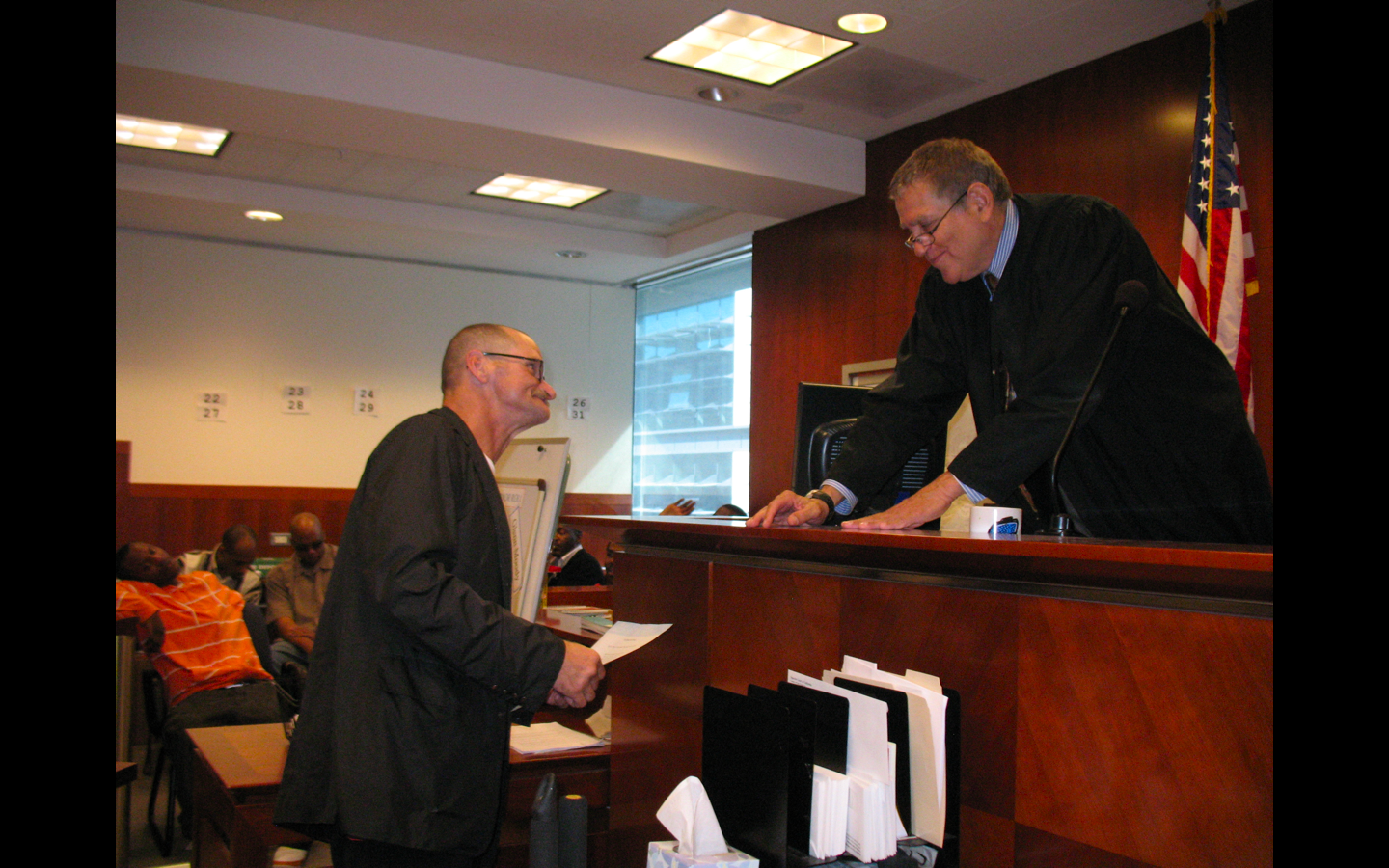
Having been part of training programs in the past, I was very impressed with the professional quality of the training itself, and the seriousness and commitment that the T & T magistrates showed over the course of the training. The training itself was the result of a special criminal justice committee, focused on drug treatment courts, led by the Honourable Mr. Justice  Geoffrey Henderson, of the High Court of Trinidad and Tobago [see photo on left].

There are other organizations, both national and international, engaged in the development of drug courts outside their national borders. I bring this particular training to your attention because I was in attendance, and because i believe that prison and criminal justice reform are directly and inextractibly connected to drug courts.  The OAS and IADCP are well aware that where drug courts show themselves to be effective, that can be the first step toward real prison reform and the development of other alternatives to prison.

I have a slightly different perspective. When abroad, I try to visit criminal courts and prisons in many of the countries I visit. It’s my belief that there are differences in cultural approaches to criminal rehabilitation that can be of tremendous importance to American drug courts. And that there is much to learn from the criminal justice systems in other, more traditional cultures.

Momentum for Prison Reform?

Feb.18,2013

Screen Shot 2013-02-18 at 10.46.15 AMA new article, in “Think Progress”, cites a host of authorites and experts who claIm that a burst of activity in the prison reform field, may signify a change of course in the criminal justice system. The article goes on to cite authorities such as the Wall Street Journal and the conservative website “Right on Crime” , as well as, the National Conference of State Legislatures and the progressive “Sentencing Project”. As a check on over-enthusiam, the Sentencing  Project reminds us, “25 states still had stable or increasing [prison] population” (click on image on left for Sentencing Project’s “On the Chopping Block: State Prison Closings”)

The question I posed at the beginning of the year “A New Year’s Editorial: Has Penal Reform Peaked“, continues to concern me.  The momentum for Prison And Sentencing Reform,  that “Think Progress” reports, is good news that should not be discounted, but the question remains as to whether reform will be substantial and self-susutaining. It’s important to monitor the extent of existing and proposed reform and the quality of that reform.

It should be remembered that we have been here before, and if we do not provide resources, supervision, and assistance as needed, we may find ourselves in a worse place than when this reform process began.


New Study Supports California Realignment Reform

Screen Shot 2013-01-27 at 11.39.45 PMJan. 28, 2013

From a press release by CSG:

“A study has been released  by the Council of State Governments, entitled The Impact of Probation and Parole Populations on Arrests in Four California Cities” (click on image on the left for a PDF copy). The study attempts to answer a question that to date has been a matter of speculation among law enforcement and corrections officials everywhere: to what extent do people on probation and parole contribute to crime, as measured by arrests?

Researchers at the CSG Justice Center collected and matched more than 2.5 million arrest, probation, and parole records generated between January 1, 2008 and June 11, 2011. Collecting and analyzing the data required the  efforts of 11 independent agencies, including four local police jurisdictions, four county probation agencies, two county sheriffs’ departments, and the California Department of Corrections and Rehabilitation.

Among the most notable findings in these four jurisdictions:

  • The majority of all adult felony and misdemeanor arrests were of people who were not currently under supervision. People under supervision accounted for only 22 percent of total arrests.
  • Whereas people under probation and parole supervision accounted for one out of every six arrests for violent crimes, they accounted for one out of every three drug arrests.
  • During a 3.5 year period in which total arrests fell by 18 percent, the number of arrests involving individuals under parole supervision declined by 61 percent and by 26 percent for individuals under probation supervision.”

It is argued that the 3.5 year study, immediately preceding the implementation of California’s Realignment Reform (starting in October, 2011) provides evidence of Realignment’s success. This preliminary information should encourage the legislature to move forward with rational prison reform, the simplification of the state’s sentencing laws, and the reduction in the extraordinary prison terms for violent crimes (that have doubled over the past thirty years).

On the other hand, sceptics of realignment, argue for an independent study of realignment, commissioned by the legislature, to determine the true effect of realignment ( see article by Dan Walters of the Sacramento Bee). To my mind, it is too early to come to any definitive conclusions, but that data should continue to be collected, while California moves forward with prison reform.


Longer sentences are not necessarily better

Screen shot 2012-11-04 at 6.14.22 PMJan. 28, 2013

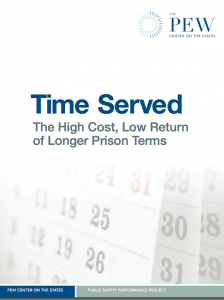
Last week, I presented the Center for Juvneile and Criminal Justice Center’s Lizzie Buchen, whose article,  “For real prison reform, look beyond the non, non, nons”, argued that research coming out of the PEW Center of the States, supports the position that longer sentences are a major reason for the explosion in prison populations and  the enormous cost of keeping prisoners locked up.  (PDF of the PEW article, “Time Served; The High Cost, Low Return of Longer Prison Terms”)

This week, Lizzie Buchen, follows with a second article, that argues for a California Sentencing Commission; “Even for violent crimes, longer is not always better” She writes,

“For the offender, longer is certainly not better: As the years go by, inmates often become more distant from their families and communities, less employable, and more deeply ingrained in prison culture (becoming “institutionalized”), all factors that hamper reentry”.

Finally, I would argue that the public’s hunger for safety (1000 sentencing bills passed by the legislature over the past three decades), is a serious problem that we need to come to grips with. How long is enough? Why does California have an almost impenetrable web of sentencing law. California’s sentencing grid is a constantly changing labyrinth of overlapping, entangling, and bewildering law that is truly understood by the few who have taken upon themselves the task of enlightening the criminal justice field. These are unacceptable circumstances that need to be addressed by the governor  and the legislature, through a Sentencing Commission, that can rationally and reasonably review, clarify and simplify our maze of sentencing laws.

Disagreement on Impact of FBI statistics

Screen shot 2012-12-02 at 10.56.20 AMJan. 28,2013

The FBi’s release of California crime statistics unleashed charges from both pro and anti-realignemnt advocates. Each side claimed that the statistics supported their position as to the effect of realignment reform upon crime in California. A January 24th LA Times article articulated the positions of both sides.

“The Sacramento-based Criminal Justice Legal Foundation said that statistics released by the FBI, show a 7.6% increase in homicide and double-digit increases in burglary and auto thefts the first half of 2012 when compared to the first six months of 2011″.

The Center on Juvenile and Criminal Justice, on the other hand, found there was ” no connection between those changes and places with the proportion of “realigned offenders,” individuals who would have gone to prison in the past but are now the wards of counties. In fact, crime rates dropped in five counties receiving a disproportionate share of those new prisoners.”

And so the argument as to realignment and its impact upon crime levels continues. With conservative and many law enforcement agencies decrying the return of prisoners to county supervision and custody, as a danger to public safety. And so-called reformers and human-rights advocates arguing that realignment is working, and where there are problems, they are caused by the government’s reluctance to take the reforms further and to provide the resources and support required for such a major  shift in prison policy.


2013 BJA Second Chance Act Adult Mentoring Solicitation

Screen Shot 2013-01-27 at 10.56.03 PMJan. 28,2013

As described in the Council of Sate Government’s Press Release ( click on image on the left for PDF of solicitation)

“On January 22, 2013, the U.S. Department of Justice’s Bureau of Justice Assistance released the fiscal year 2013 solicitation for the Second Chance Act Adult Mentoring and Transitional Services for Successful Reentry Program. Nonprofit organizations and federally recognized Indian tribes are invited to apply to receive up to $300,000 over a two-year period to provide mentoring and transitional services to individuals returning from prison or jail. Awards will be made in two categories: mentoring programs for adult offenders generally and mentoring programs that focus on adult offenders who are parents, particularly those who are non-custodial parents. Applicants may apply under Category 1 or Category 2, but not both”

Applications are due by 11:59 p.m. ET on March 21, 2013.


California prison terms for violent criminals more than double

In an article published by the Center on Juvenile and Criminal Justice, the Center disputes Governor Brown’s argument that all those who could safely be released from prison had already been released. The Center relies in part on a recent study by the Pew Center for the States (click on image on the left, to obtain a PDF of the PEW article, “Time Served; The High Cost, Low Return of Longer Prison Terms”)

The Center on Juvenile and Criminal Justice, relying on PEW data, argues that ”  California offenders who committed violent crimes can now expect to serve 7 years in prison — in 1990, they would have served less than 3. Looking at people who committed murder, those who were released in 2009 served an average of 16 years; now, they can expect to serve more than 50 years. This lengthening of sentences for violent crimes is a major reason California’s prisons are overflowing and will continue to do so. In 2009, nearly 100,000 of the state’s prison inmates were doing time for violent crimes, a number that will only grow as the exit door continues to recede.”

It would appear that Governor Brown’s suggestion to the rest of the nation, that they consider California as a model for Penal Reform, may be a bit premature. While the Governor’s realignment plan and funding are an important start in California’s Penal reform process, it would appear that we have a long way to go before we can describe the California Penal System California as a model.


Cal satisfied with reform, though 8900 in Private Prisons

Jan. 14, 2013

Governor Brown has made his position clear. He will take the issue of whether additional prisoners should be released, back to the Federal Courts. The question to be answered is whether California has he done enough to satisfy the courts, by reducing the number of prisoners by 43,000 inmates over the last 15 months.

Governor Brown claims that medical concerns, the basis of the federal court order, have been satisfied both by medical facility improvements and  by substantial reductions in the number of prisoners.  Brown has attacked the courts as meddling with the internal affairs of California. Reform advocates on the other hand, argue that California hasn’t done enough to reduce the number of inmates, and that even a reduction by an additional 13,000 inmates as the court order demands, is only a first step in enacting necessary prison reform in California.

A related issue is the number of California prisoners in private prisons. According to a recent article in the Los Angeles Times, “State prison reports show that since November, California has been increasing the number of inmates shipped out of state. Brown last year said he intended to end the state’s contracts with private prison operator Corrections Corp. of America as a way to save money. A July research brief for the Center on Juvenile and Criminal Justice, reports that the state currently spends more than $426 million a year to buy space at prisons operated by the Tennessee-based company. (The California Department of Corrections and Rehabilitation contends the spending is much lower: $316 million.) The number of out-of-state inmates has run from a high of 10,000 in 2010 to a low of 8,500 last October. State prison population reports show it rose to more than 8,900 in late December”


This is a “hot button” issue for many prisoner advocates, as private prisons, located outside the state, make contact with family and community difficult at best.It remains to be seen whether the courts will lift their demand that California reduce its prison population further or whether Brown will succeed in staving off further prison reductions. But the issue of whether California has gone far enough to reduce its prison population, will continue to be a highly charged issue.

BJA calls for application for Technology Training Grant

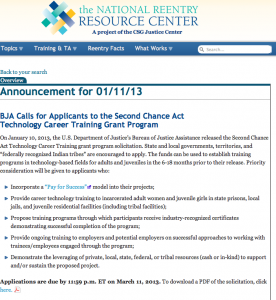
The Council of State Governments has released this press release announcement regarding the recently announced  Bureau of Justice,  Call for Applicants for the Second Chance Act Technology Career Training Grant Program. The deadline for applications is March 11, 2013. [See full announcement by clicking on image to the left]

A New Year’s Editorial: Has Penal Reform Peaked?

Judge Jeffrey Tauber (ret.)

Jan 8, 2013

There has been a noticeable slowing down of state penal reform over the past year. It is possible or even probable that the enormous volume of penal reform enacted is being digested by the states before further reform can be initiated. But there are reports coming out of a number of states that suggest that the wave of reform may  have peaked as state legislatures and governors, as well as county officals, balk at the results and costs of new reforms.

There are serious problems even in states that are making a good faith effort to make penal reform work. If states put serious offenders in overcrowded local jails or poorly structured and funded alternative programs to incarceration, they will be setting their penal reform efforts up for failure. As has happened so often before, reforms are embraced and those released into the community receieve neither the education, resources, or support to be successful on the outside.

One of the most debilitating examples of this phenomenum, was the closing down of mental hospitals between 1970 and 1980. the promise made was that half-way houses, community mental health programs, and other critical support would complete needed reform. The reality was that many of those released ended up on the streets and continue to be a sordid example of how institutional reform can be a sabotaged by government inaction.

Montana and Arkansas are examples of states that are second guessing their state’s  penal reform efforts (see facebook stream on the right). While many dislike the idea of releasing prison bound offenders to county facilities and local programs, even more are concerned with whether the states will provide sufficient funds to county probation departments and non-profit organizations to  provide the rehabilitative and supervisory services required. At the same time, it should also be acknowledged than states are dealing with penal reform during a period where fiscal restraints on the court and criminal justice system are paralyzing many good-fsith efforts to move forward.

I remain hopeful that the penal reform that has been sweeping the nation will continue to build momentum and that substantial reform will reach every state. But from what I’ve learned from discussions with criminal justice professionals nationwide (and  my experiences as an.assigned judge sitting in courtrooms across Northern Callfornia), I remain concerned. It appears that the best many states can do to provide a path to rehabilitation, is early release from prison with a  pat on the back and a referral to the nearest AA/NA meeting.

Cal Probation Chiefs hail Split Sentencing

Jan. 7, 2013

The Chief Probation Officers of Califronia (CPOC), through Marin Probation Chief Michael Daly, issued a press release arguing that the new resources made available to them under AB109, are increasing the effectiveness of sentencing and reducing recidivism while increasing the effectiveness of probation rehabilitation efforts. The press release issued 12/19/12 (escaping my attention during the holliday season). describes a recent study conducted by the James Irvine Foundation, “Mandatory Supervision: The Benefits of Evidence Based Supervision under Public Safety Realignment”

“The good news is that probation departments have been utilizing evidence-based practices before Realignment and that has helped us easily adapt to probation’s greater role in our new responsibilities,” said Marin Chief of Probation Michael Daly, “research has shown that conducting risk assessments, targeting specific needs of each individual and utilizing swift and certain sanctions actually work with this population..” ( CPOC Press Release)

But the Association also points out that  one of the most valuable new tools of the courts and probation, Split-Sentencing is being used sparingly.  The California Realignment Statute requires that a judge sentence an offender (who might have previously been sentenced to prison), to county jail, when the offense is non-violent, non-serious, or non-sexual,  The court can then sentence the offender to straight county jail time or split the sentence between jail and “mandatory supervision” ( akin to probation). This is an opportunity for judges to leverage compliance with education, job training, and cognitive therapy requirements in exchange for reduced custody or other incentives. The Probation Chiefs point out that only 23% of offenders sentenced to county jail on a prison offense were given split sentences, between Oct. 2011 and June 2012. Instead, the vast majority are sentenced  to county jail sentence with no possibility of community supervision.

While the tone of the report ad press release are positive, I believe the “Split Sentencng” issue is  serious. Courts and criminal justice systems are overwhelmed with cases, at a time when funding continues to tighten. As the probation chiefs point out, ” the inconsistent use of split sentences in counties, can limit their ability to reduce overcrowding in their jails and lead to less favorable outcomes using incarceration alone for offenders”. To my mind , the Chiefs are arguing for a more systematic sentencing structure that takes full advantage of evidence-based sentencing processes and maximizes the  leverage provided by “Split Sentencing”.


Practitioner Fact Sheet on Sanctions and Incentives

Dec. 17, 2012

Drug Court Research can provide a great deal of critical information to those engaged in the development of Reentry Courts and other Evidence-based Sentencing Systems. Dr. Doug Marlowe, Chief of Science, Policy & Law, National Association of Drug Court Professionals, continues to produce invaluable practitioner information to the Collaborative Court field.

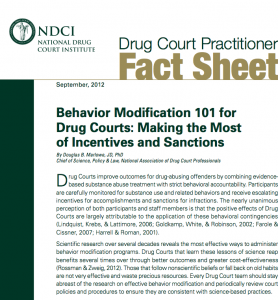
Dr. Marlowe makes this important observation in his “Drug Court Practioner Fact Sheet, Behavior Modification 101 for drug Courts: Making the Most of Incentives and Sanctions” (click on image on the left for PDF).

“At its core, the criminal justice system is a behavior modification program designed to reduce crime and rehabilitate offenders. Historically, unfortunately, rewards and sanctions were rarely applied in a systematic manner that could produce meaningful or lasting effects. Dissatisfied with this unacceptable state of affairs, a group of criminal court judges set aside special dockets to provide closer supervision and greater accountability for substance-dependent and substance-abusing offenders. Wittingly or unwittingly, these judges devised programs that are highly consonant with the scientific principles of contingency management or operant conditioning.

Research now confirms that the effectiveness and cost-effectiveness of any Drug Court will depend largely on its ability to apply these behavioral techniques correctly and efficiently. Drug Courts that ignore the lessons of science are not very effective and waste precious resources and opportunities. Drug Court teams should periodically consult the latest findings on behavior modification and attend training and technical assistance activities to ensure they are making the most of their limited resources and leveraging the best outcomes for their participants and their communities.” (p.8)

Reentry Courts and Evidence-Based Sentencing Systems would do well to familiarize themselves with this NDCI publication  (It should be noted that appropriate Drug Court methodology can sometimes differ substantially when applied to different populations; more on that later). Systemic Approaches are clearly key to the effective sentencing and rehabilitation of all offenders, not just those who are drug dependent. The application of  “Evidence Based Sentencing Systems, then is especially important when jurisdictions sentence serious offenders. (See: An Overview of a Court-Based Sentencing System and Court-Based Realignment Recommendations; immediately below))


An Overview of a Court-Based Sentencing System

The following  diagram and descriptive analysis of an Evidence-Based Sentencing System were published in September  as a development tool for California Counties building realignment sentencing structures. 

(A 12 Part Series on Sentencing Systems, can be found to under “SENTENCING SYTEMS” (or by clicking on the diagram below)
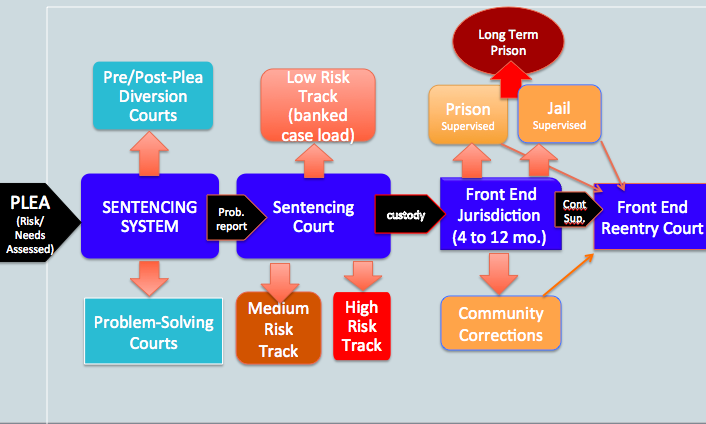
 

AN OVERVIEW OF A SYSTEMIC SENTENCING MODEL   PDF

The diagram above can be thought of having two separate phases. The first (from “Plea” arrow to “Custody” arrow) focuses in on the need to effectively categorize, sentence, and track offenders, with a minimum of staff and resources. Tracks are essential to the system as the court will sentence and monitor offenders with very different risks and needs. A sentencing team with a different skill set is required to deal with low risk and diversion participants than with high risk and violent offenders (as a different team skill set would be required for Drug Court as opposed to Domestic Violence Court).

We know from the scientific literature that mixing low and high-risk offenders is counter-productive at best. That same dynamic works in the courtroom. Where possible, it’s best to keep participants with different risk levels apart. It’s also more cost-effective. Why have full staff at every session when you can substantially reduce the number of staff by sorting offenders by risk and need. When you create a participant track with few housing, job, or family issues, experienced staff in those areas can best use their time elsewhere. The savings would be substantial if case managers are designated to be in court once a week for a single track, rather than required to attend daily sessions

The second part of the diagram (from “Front End Jurisdiction” through Front End Reentry Court”) focuses on the potential for an “Early Intervention”. We focus on the front end because almost all states give their courts a window to recall the felon from prison within a relatively short time period  (typically 4 to 12 months).  Where courts are willing to use their statutory authority, serious and/or high-risk offenders can complete a rehabilitation program over a short jail or prison term and avoid a long prison sentence. The opposite is true for felons sentenced to long prison terms (or even medium terms of 1 to 3 years). In most states, there is relatively little opportunity for a court to exercise authority over the “Back End”, as the felon, typically returns to the community under state supervision.

Decision Making in a Sentencing System

Offender Tracks are normally the province of Probation or other supervisory agencies. When used at all, they reflect internal decisions in determining the level of supervision and treatment appropriate for a probationer.  With validated Risk/Needs Assessments available, the final decision as to court related tracks ought to be left to the court, based upon the recommendations of the full sentencing team.

Court tracking is essential to keep offenders with similar risk and needs together, maximizing the opportunities for building positive relationships with the court and participants and limiting the negative consequences of mixing offenders with different risk levels.  The court will need to schedule tracks when required staffing and resource personnel are present. Optimally, the only personnel present at all sessions will be the judge, clerk, and court manager. Review below the process and procedures:

a. A risk assessment is completed even before sentencing and optimally before a plea is taken so all parties will have an understanding of the sentencing issues early on. (Ideally, the level of treatment/rehabilitation or appropriate track designation should not be the subject of a plea agreement).

b. An individual may be given the opportunity to accept pre-plea Diversion (often called District Attorney’s Diversion). Once a complaint is filed, the court has substantial control over pre-plea and post-plea felony Diversion, as well as pre and post-plea Problem-Solving Courts. A Diversion or Problem Solving Court judge typically takes a plea, sentences the offender, monitors the offender over the course of the program (including in-custody progress), and presides over their graduation from the program.

c. The lead judge (or a designee) takes the plea in most other felony cases, reviewing the risk/needs assessment already completed, and sentences the felon either to probation or prison (if the offense is violent or the offender a danger to the community). If the offender is appropriate for probation , the sentencing judge will decide whether the felon should be placed in a low, medium or high risk supervision track. Depending on the number of offenders and resources available, there could be sub-tracks within each risk category (when offender’s needs differ substantially in criminogenic attitudes and beliefs, gender concerns, drugs or alcohol problems, mental health issues, housing, job and/or education needs, and family/ parental issues)

1. Low risk offenders; Probation (banked file): Where the offender is neither a risk to society or has special needs, the court might see the offender once, shortly after probation placement, focusing the offender’s attention on probation compliance, and only see the felon again, if there is a substantial change of circumstances (note: Diversion contacts are often as minimal).

2. Medium risk offender, Probation (straight community corrections); Where the offender has a medium risk of re-offending and has special criminogenic needs, the felon would be placed in a track on a regular court schedule. Compliance in this track would require completion of cognitive behavioral and other rehabilitation services, with compliance resulting in substantial incentives and rewards. Compliance will allow the court to back off from contacts with probationers (unless changed circumstances or graduation)

3. High Risk offender, Probation (often a substantial jail term); Intensive supervision requirements might include attending court sessions on a weekly basis (remaining in court until all participants have been seen), a minimum of twice weekly contacts with a case manager, intensive cognitive behavioral therapy sessions, and pro-social activities for at least 40 hours per week (for at least 90 days)

Reducing Prison terms through Front-End Sentencing

The second half of the diagram represents the use of alternatives to prison terms, allowing us to use an evidence-based sentencing system as a means to keep serious (but non-violent) offenders from serving long prison terms.

The front-end of a prison sentence provides the only substantial opportunity a court has to effect a prison term, once a felon is sentenced. Few courts use that statutory authority to return the felon from prison. When used at all, the authority is often applied in by individual judges in a non-systemic fashion.

“Front-End Systemic Approaches” to long prison terms described here present an opportunity to use graduated sanctions rather than immediate prison sentences for serious, but not-violent offenses. Such Front-End Systems can be structured in different ways. Some courts may include non-prison sentences (typically county jail or community corrections programs) as part of an “alternatives to prison” system.

Systemic approaches to “Front-End Alternatives to Prison” might start with a Community Corrections level alternative sentence. With new offenses and/or serious violations of probation, they might move up to a county jail alternative, and finally to a short-term prison sentence in lieu of a long-term prison sentence. Depending on the seriousness of the offense, an offender might start a  ”Front-End” Intervention at any of the three levels.

A.  Community Corrections Sentence in lieu of Prison: Less often used than other alternatives, this community based alternative to prison (typically residential treatment or correctional housing while an offender receives education, job training or employment), allows the judge to closely follow the offenders participation in a community based program, providing incentives or sanctions as appropriate. With successful program completion, the participant is returned to the community to continue supervision and rehabilitation under court authority. [Note: this alternative can be the first of two used before the offender is ordered to serve any prison sentence]

B. County Jail Alternative: This second tier “Front End Prison Alternative” can better emphasize the risk that the felon has of being sent to prison. Like the “Community Corrections Alternative, the County Jail Alternative allows close monitoring by the sentencing judge, appropriate incentives and sanctions, and a return to the community for further court supervision.

C. Front-End Prison Term: This ought to be thought of as a felon’s last opportunity to avoid a long prison term. Depending on the seriousness of the offense, some jurisdictions will start the Front-End Sentencing process with a prison term (skipping over possible Community Corrections and County Jail level interventions), hopefully reducing a long term sentence to a relatively brief 4 to 12 months in prison, and returning the felon to the community to complete the sentence under court supervision.


Court-Based Realignment Recommendations


Published on September 9, 2012, I have set out possible sentencing reforms, based on the “Twelve Part Series on Evidence-Based Sentencing Systems” that may be relevant to a California County’s Realignment Process.  PDF

SENTENCING AND MANDATORY SUPERVISION UNDER PC 1170(H)

  1.  Start the risk assessment and classification process at plea or sentencing if possible, so the judge can make the most appropriate sentencing decisions.
  2. Create a seamless process for offenders, with a designated sentencing judge and staff monitoring and supervising offenders through the entire sentencing period.
  3. Develop court tracks that reflect probation classifications based on risks/needs assessments, and tailor appropriate court involvement and contacts to that data.
  4. Where appropriate, hold court hearings for in-custody offenders to encourage compliance with a rehabilitation plan through continued court monitoring.
  5. Use the court’s jurisdiction to motivate offenders to do well in their program by providing substantial incentives keyed to an incentives guideline.
  6. Have all newly released offenders, on “mandatory supervision”, meet with the judge for a brief interview, to set goals and remind the offender of program rules.
  7. Use custody as a sanction of last resort, relying on increased rehabilitation and treatment requirements, as well as, community service to correct misbehavior.
  8. Take advantage of the latest scientific findings, using evidence based sentencing practices to engage the offender in pro-social activities and cognitive therapies.
  9.  Create a technology system able to share data and information, reducing the need for team member’s personal presence, but maintaining court’s presence/influence.
  10. Look to probation, other government agencies, and community for partnerships.
POST RELESE COMMUNTIY SUPERVISON
  1.  Involve the court early, if only as a symbol of the system’s new found solidarity and commitment to work together, with the judge assisting in the process.
  2. The court should be considered an important resource in the reentry process, and while not directing the rehabilitation plan, assisting probation and the community.
  3. The court should  briefly interview the offender returned to the county, to remind the offender of the court’s interest, support, and concern.
  4. A Reentry Court. authorized by statute at the time of the revocation hearing,  may become involved as a community and probation based option even before a violation occurs, in a way, similar to the process defined above under 1170 (H).


Indiana Reentry Court Gets $1 Million Federal Grant

12/10/12

A recent article in the Evansville Courier Press impressed me with its description of the Vanderburgh Superior Court,  Judges Wayne Trockman and David Kiely and their Reentry court programs, which will receive nearly $1 million in grants and state reimbursements that will allow it to nearly double in size.

Of special note are the Re-Entry and Forensic Courts.  “The Re-Entry Court works with the Indiana Department of Correction to allow felony offenders to serve 9 to 12 months of their sentence in segregated treatment at state prisons and then return to the county in a supervised continuation of their treatment program followed by a period of drug and alcohol probation. It is this Re-Entry Court program for which Vanderburgh County is now receiving reimbursements. Similarly, the Forensic Diversion Court allows people convicted and sentenced on lesser felony charges to participate in a court-supervised program rather than serve prison time.”

Both programs appear to rely heavily on what could be described as a Front-End Reentry Court Model, as they allow offenders, who otherwise would be facing long prison sentences, to spend less than a year in custody before returning to locally supervised treatment and rehabilitation programs. They are an important example of how Indiana Courts, are taking the lead in developing innovative reentry court programs (see article on Judge John Surbeck and the Allen County, Indiana Reentry Court)


© 2007 -  Reentry Court Solutions. All Rights Reserved.


Reentry Court Solutions Powered by Communications Team