A New Year’s Editorial: Has Penal Reform Peaked?

Judge Jeffrey Tauber (ret.)

Jan 8, 2013

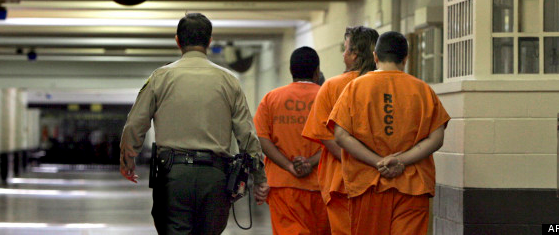
There has been a noticeable slowing down of state penal reform over the past year. It is possible or even probable that the enormous volume of penal reform enacted is being digested by the states before further reform can be initiated. But there are reports coming out of a number of states that suggest that the wave of reform may  have peaked as state legislatures and governors, as well as county officals, balk at the results and costs of new reforms.

There are serious problems even in states that are making a good faith effort to make penal reform work. If states put serious offenders in overcrowded local jails or poorly structured and funded alternative programs to incarceration, they will be setting their penal reform efforts up for failure. As has happened so often before, reforms are embraced and those released into the community receieve neither the education, resources, or support to be successful on the outside.

One of the most debilitating examples of this phenomenum, was the closing down of mental hospitals between 1970 and 1980. the promise made was that half-way houses, community mental health programs, and other critical support would complete needed reform. The reality was that many of those released ended up on the streets and continue to be a sordid example of how institutional reform can be a sabotaged by government inaction.

Montana and Arkansas are examples of states that are second guessing their state’s  penal reform efforts (see facebook stream on the right). While many dislike the idea of releasing prison bound offenders to county facilities and local programs, even more are concerned with whether the states will provide sufficient funds to county probation departments and non-profit organizations to  provide the rehabilitative and supervisory services required. At the same time, it should also be acknowledged than states are dealing with penal reform during a period where fiscal restraints on the court and criminal justice system are paralyzing many good-fsith efforts to move forward.

I remain hopeful that the penal reform that has been sweeping the nation will continue to build momentum and that substantial reform will reach every state. But from what I’ve learned from discussions with criminal justice professionals nationwide (and  my experiences as an.assigned judge sitting in courtrooms across Northern Callfornia), I remain concerned. It appears that the best many states can do to provide a path to rehabilitation, is early release from prison with a  pat on the back and a referral to the nearest AA/NA meeting.

Cal Probation Chiefs hail Split Sentencing

Jan. 7, 2013

The Chief Probation Officers of Califronia (CPOC), through Marin Probation Chief Michael Daly, issued a press release arguing that the new resources made available to them under AB109, are increasing the effectiveness of sentencing and reducing recidivism while increasing the effectiveness of probation rehabilitation efforts. The press release issued 12/19/12 (escaping my attention during the holliday season). describes a recent study conducted by the James Irvine Foundation, “Mandatory Supervision: The Benefits of Evidence Based Supervision under Public Safety Realignment”

“The good news is that probation departments have been utilizing evidence-based practices before Realignment and that has helped us easily adapt to probation’s greater role in our new responsibilities,” said Marin Chief of Probation Michael Daly, “research has shown that conducting risk assessments, targeting specific needs of each individual and utilizing swift and certain sanctions actually work with this population..” ( CPOC Press Release)

But the Association also points out that  one of the most valuable new tools of the courts and probation, Split-Sentencing is being used sparingly.  The California Realignment Statute requires that a judge sentence an offender (who might have previously been sentenced to prison), to county jail, when the offense is non-violent, non-serious, or non-sexual,  The court can then sentence the offender to straight county jail time or split the sentence between jail and “mandatory supervision” ( akin to probation). This is an opportunity for judges to leverage compliance with education, job training, and cognitive therapy requirements in exchange for reduced custody or other incentives. The Probation Chiefs point out that only 23% of offenders sentenced to county jail on a prison offense were given split sentences, between Oct. 2011 and June 2012. Instead, the vast majority are sentenced  to county jail sentence with no possibility of community supervision.

While the tone of the report ad press release are positive, I believe the “Split Sentencng” issue is  serious. Courts and criminal justice systems are overwhelmed with cases, at a time when funding continues to tighten. As the probation chiefs point out, ” the inconsistent use of split sentences in counties, can limit their ability to reduce overcrowding in their jails and lead to less favorable outcomes using incarceration alone for offenders”. To my mind , the Chiefs are arguing for a more systematic sentencing structure that takes full advantage of evidence-based sentencing processes and maximizes the  leverage provided by “Split Sentencing”.


Practitioner Fact Sheet on Sanctions and Incentives

Dec. 17, 2012

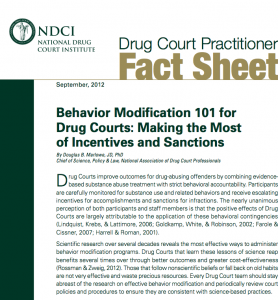
Drug Court Research can provide a great deal of critical information to those engaged in the development of Reentry Courts and other Evidence-based Sentencing Systems. Dr. Doug Marlowe, Chief of Science, Policy & Law, National Association of Drug Court Professionals, continues to produce invaluable practitioner information to the Collaborative Court field.

Dr. Marlowe makes this important observation in his “Drug Court Practioner Fact Sheet, Behavior Modification 101 for drug Courts: Making the Most of Incentives and Sanctions” (click on image on the left for PDF).

“At its core, the criminal justice system is a behavior modification program designed to reduce crime and rehabilitate offenders. Historically, unfortunately, rewards and sanctions were rarely applied in a systematic manner that could produce meaningful or lasting effects. Dissatisfied with this unacceptable state of affairs, a group of criminal court judges set aside special dockets to provide closer supervision and greater accountability for substance-dependent and substance-abusing offenders. Wittingly or unwittingly, these judges devised programs that are highly consonant with the scientific principles of contingency management or operant conditioning.

Research now confirms that the effectiveness and cost-effectiveness of any Drug Court will depend largely on its ability to apply these behavioral techniques correctly and efficiently. Drug Courts that ignore the lessons of science are not very effective and waste precious resources and opportunities. Drug Court teams should periodically consult the latest findings on behavior modification and attend training and technical assistance activities to ensure they are making the most of their limited resources and leveraging the best outcomes for their participants and their communities.” (p.8)

Reentry Courts and Evidence-Based Sentencing Systems would do well to familiarize themselves with this NDCI publication  (It should be noted that appropriate Drug Court methodology can sometimes differ substantially when applied to different populations; more on that later). Systemic Approaches are clearly key to the effective sentencing and rehabilitation of all offenders, not just those who are drug dependent. The application of  “Evidence Based Sentencing Systems, then is especially important when jurisdictions sentence serious offenders. (See: An Overview of a Court-Based Sentencing System and Court-Based Realignment Recommendations; immediately below))


An Overview of a Court-Based Sentencing System

The following  diagram and descriptive analysis of an Evidence-Based Sentencing System were published in September  as a development tool for California Counties building realignment sentencing structures. 

(A 12 Part Series on Sentencing Systems, can be found to under “SENTENCING SYTEMS” (or by clicking on the diagram below)
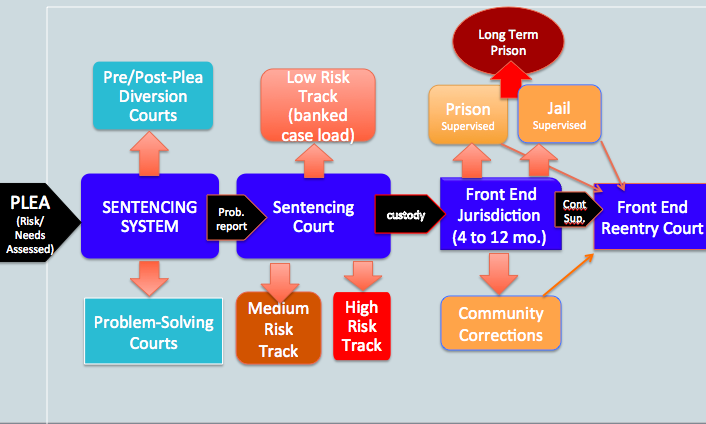
 

AN OVERVIEW OF A SYSTEMIC SENTENCING MODEL   PDF

The diagram above can be thought of having two separate phases. The first (from “Plea” arrow to “Custody” arrow) focuses in on the need to effectively categorize, sentence, and track offenders, with a minimum of staff and resources. Tracks are essential to the system as the court will sentence and monitor offenders with very different risks and needs. A sentencing team with a different skill set is required to deal with low risk and diversion participants than with high risk and violent offenders (as a different team skill set would be required for Drug Court as opposed to Domestic Violence Court).

We know from the scientific literature that mixing low and high-risk offenders is counter-productive at best. That same dynamic works in the courtroom. Where possible, it’s best to keep participants with different risk levels apart. It’s also more cost-effective. Why have full staff at every session when you can substantially reduce the number of staff by sorting offenders by risk and need. When you create a participant track with few housing, job, or family issues, experienced staff in those areas can best use their time elsewhere. The savings would be substantial if case managers are designated to be in court once a week for a single track, rather than required to attend daily sessions

The second part of the diagram (from “Front End Jurisdiction” through Front End Reentry Court”) focuses on the potential for an “Early Intervention”. We focus on the front end because almost all states give their courts a window to recall the felon from prison within a relatively short time period  (typically 4 to 12 months).  Where courts are willing to use their statutory authority, serious and/or high-risk offenders can complete a rehabilitation program over a short jail or prison term and avoid a long prison sentence. The opposite is true for felons sentenced to long prison terms (or even medium terms of 1 to 3 years). In most states, there is relatively little opportunity for a court to exercise authority over the “Back End”, as the felon, typically returns to the community under state supervision.

Decision Making in a Sentencing System

Offender Tracks are normally the province of Probation or other supervisory agencies. When used at all, they reflect internal decisions in determining the level of supervision and treatment appropriate for a probationer.  With validated Risk/Needs Assessments available, the final decision as to court related tracks ought to be left to the court, based upon the recommendations of the full sentencing team.

Court tracking is essential to keep offenders with similar risk and needs together, maximizing the opportunities for building positive relationships with the court and participants and limiting the negative consequences of mixing offenders with different risk levels.  The court will need to schedule tracks when required staffing and resource personnel are present. Optimally, the only personnel present at all sessions will be the judge, clerk, and court manager. Review below the process and procedures:

a. A risk assessment is completed even before sentencing and optimally before a plea is taken so all parties will have an understanding of the sentencing issues early on. (Ideally, the level of treatment/rehabilitation or appropriate track designation should not be the subject of a plea agreement).

b. An individual may be given the opportunity to accept pre-plea Diversion (often called District Attorney’s Diversion). Once a complaint is filed, the court has substantial control over pre-plea and post-plea felony Diversion, as well as pre and post-plea Problem-Solving Courts. A Diversion or Problem Solving Court judge typically takes a plea, sentences the offender, monitors the offender over the course of the program (including in-custody progress), and presides over their graduation from the program.

c. The lead judge (or a designee) takes the plea in most other felony cases, reviewing the risk/needs assessment already completed, and sentences the felon either to probation or prison (if the offense is violent or the offender a danger to the community). If the offender is appropriate for probation , the sentencing judge will decide whether the felon should be placed in a low, medium or high risk supervision track. Depending on the number of offenders and resources available, there could be sub-tracks within each risk category (when offender’s needs differ substantially in criminogenic attitudes and beliefs, gender concerns, drugs or alcohol problems, mental health issues, housing, job and/or education needs, and family/ parental issues)

1. Low risk offenders; Probation (banked file): Where the offender is neither a risk to society or has special needs, the court might see the offender once, shortly after probation placement, focusing the offender’s attention on probation compliance, and only see the felon again, if there is a substantial change of circumstances (note: Diversion contacts are often as minimal).

2. Medium risk offender, Probation (straight community corrections); Where the offender has a medium risk of re-offending and has special criminogenic needs, the felon would be placed in a track on a regular court schedule. Compliance in this track would require completion of cognitive behavioral and other rehabilitation services, with compliance resulting in substantial incentives and rewards. Compliance will allow the court to back off from contacts with probationers (unless changed circumstances or graduation)

3. High Risk offender, Probation (often a substantial jail term); Intensive supervision requirements might include attending court sessions on a weekly basis (remaining in court until all participants have been seen), a minimum of twice weekly contacts with a case manager, intensive cognitive behavioral therapy sessions, and pro-social activities for at least 40 hours per week (for at least 90 days)

Reducing Prison terms through Front-End Sentencing

The second half of the diagram represents the use of alternatives to prison terms, allowing us to use an evidence-based sentencing system as a means to keep serious (but non-violent) offenders from serving long prison terms.

The front-end of a prison sentence provides the only substantial opportunity a court has to effect a prison term, once a felon is sentenced. Few courts use that statutory authority to return the felon from prison. When used at all, the authority is often applied in by individual judges in a non-systemic fashion.

“Front-End Systemic Approaches” to long prison terms described here present an opportunity to use graduated sanctions rather than immediate prison sentences for serious, but not-violent offenses. Such Front-End Systems can be structured in different ways. Some courts may include non-prison sentences (typically county jail or community corrections programs) as part of an “alternatives to prison” system.

Systemic approaches to “Front-End Alternatives to Prison” might start with a Community Corrections level alternative sentence. With new offenses and/or serious violations of probation, they might move up to a county jail alternative, and finally to a short-term prison sentence in lieu of a long-term prison sentence. Depending on the seriousness of the offense, an offender might start a  ”Front-End” Intervention at any of the three levels.

A.  Community Corrections Sentence in lieu of Prison: Less often used than other alternatives, this community based alternative to prison (typically residential treatment or correctional housing while an offender receives education, job training or employment), allows the judge to closely follow the offenders participation in a community based program, providing incentives or sanctions as appropriate. With successful program completion, the participant is returned to the community to continue supervision and rehabilitation under court authority. [Note: this alternative can be the first of two used before the offender is ordered to serve any prison sentence]

B. County Jail Alternative: This second tier “Front End Prison Alternative” can better emphasize the risk that the felon has of being sent to prison. Like the “Community Corrections Alternative, the County Jail Alternative allows close monitoring by the sentencing judge, appropriate incentives and sanctions, and a return to the community for further court supervision.

C. Front-End Prison Term: This ought to be thought of as a felon’s last opportunity to avoid a long prison term. Depending on the seriousness of the offense, some jurisdictions will start the Front-End Sentencing process with a prison term (skipping over possible Community Corrections and County Jail level interventions), hopefully reducing a long term sentence to a relatively brief 4 to 12 months in prison, and returning the felon to the community to complete the sentence under court supervision.
Court-Based Realignment Recommendations


Published on September 9, 2012, I have set out possible sentencing reforms, based on the “Twelve Part Series on Evidence-Based Sentencing Systems” that may be relevant to a California County’s Realignment Process.  PDF

SENTENCING AND MANDATORY SUPERVISION UNDER PC 1170(H)

  1.  Start the risk assessment and classification process at plea or sentencing if possible, so the judge can make the most appropriate sentencing decisions.
  2. Create a seamless process for offenders, with a designated sentencing judge and staff monitoring and supervising offenders through the entire sentencing period.
  3. Develop court tracks that reflect probation classifications based on risks/needs assessments, and tailor appropriate court involvement and contacts to that data.
  4. Where appropriate, hold court hearings for in-custody offenders to encourage compliance with a rehabilitation plan through continued court monitoring.
  5. Use the court’s jurisdiction to motivate offenders to do well in their program by providing substantial incentives keyed to an incentives guideline.
  6. Have all newly released offenders, on “mandatory supervision”, meet with the judge for a brief interview, to set goals and remind the offender of program rules.
  7. Use custody as a sanction of last resort, relying on increased rehabilitation and treatment requirements, as well as, community service to correct misbehavior.
  8. Take advantage of the latest scientific findings, using evidence based sentencing practices to engage the offender in pro-social activities and cognitive therapies.
  9.  Create a technology system able to share data and information, reducing the need for team member’s personal presence, but maintaining court’s presence/influence.
  10. Look to probation, other government agencies, and community for partnerships.
POST RELESE COMMUNTIY SUPERVISON
  1.  Involve the court early, if only as a symbol of the system’s new found solidarity and commitment to work together, with the judge assisting in the process.
  2. The court should be considered an important resource in the reentry process, and while not directing the rehabilitation plan, assisting probation and the community.
  3. The court should  briefly interview the offender returned to the county, to remind the offender of the court’s interest, support, and concern.
  4. A Reentry Court. authorized by statute at the time of the revocation hearing,  may become involved as a community and probation based option even before a violation occurs, in a way, similar to the process defined above under 1170 (H).


Indiana Reentry Court Gets $1 Million Federal Grant

12/10/12

A recent article in the Evansville Courier Press impressed me with its description of the Vanderburgh Superior Court,  Judges Wayne Trockman and David Kiely and their Reentry court programs, which will receive nearly $1 million in grants and state reimbursements that will allow it to nearly double in size.

Of special note are the Re-Entry and Forensic Courts.  “The Re-Entry Court works with the Indiana Department of Correction to allow felony offenders to serve 9 to 12 months of their sentence in segregated treatment at state prisons and then return to the county in a supervised continuation of their treatment program followed by a period of drug and alcohol probation. It is this Re-Entry Court program for which Vanderburgh County is now receiving reimbursements. Similarly, the Forensic Diversion Court allows people convicted and sentenced on lesser felony charges to participate in a court-supervised program rather than serve prison time.”

Both programs appear to rely heavily on what could be described as a Front-End Reentry Court Model, as they allow offenders, who otherwise would be facing long prison sentences, to spend less than a year in custody before returning to locally supervised treatment and rehabilitation programs. They are an important example of how Indiana Courts, are taking the lead in developing innovative reentry court programs (see article on Judge John Surbeck and the Allen County, Indiana Reentry Court)


South Bend leads in Reentry Courts

The following brief description of the Vanderburgh Reentry Court was printed on this website in 2010:

Nov.1, 2010

South Bend, Indiana has been at the forefront of the re-entry court movement in Indiana. Much of the credit goes to Judge Wayne Truckman, of the Vanderburgh Superior Court, who has been a leader in the development of Reentry Courts at the local and state levels.

The Vanderburgh Forensic Diversion Court, started in 2003, is focused on non-violent offenders who, but for the court’s intervention, would probably be sent to state prison.

The Vanderburgh Reentry  Court, started approximately four years ago, sends offenders to prison under a special statute championed by Judge Truckman, that segregates offenders in prison, and typically returns them to the Court for continuing supervision and rehabilitation services within a year of being sentenced to prison.

According to a story in the Courier press.com., the Forensic Diversion Court and the Reentry Court are being watched closely by other Indiana counties as programs to be replicated in their communities.

UN Conference On Drugs Planned for 2016

November 27, 2012

 The UN General Assembly Approves Resolution Presented by Mexico on International Cooperation Against Drugs

from the Mexican Foreign Ministry’s Press Page:

  • The resolution incorporates the proposal from the President of Mexico to hold a UN General Assembly Special Session on drugs
  • It was co-sponsored by 95 countries including various countries in Latin America and the Caribbean and in the European Union, as well as Japan, China, Australia, and the United States

The Foreign Ministry is pleased to inform that the 67 UN General Assembly unanimously adopted the resolution presented by Mexico on international cooperation on the global problem of drugs.

Ninety-five United Nations member countries sponsored the draft resolution including various countries in Latin America and the Caribbean and in the European Union, as well as Japan, China, Australia, and the United States.

The proposal of the President of Mexico had the support of the presidents of Guatemala, Colombia, Costa Rica, Belize and Honduras and was supported by the Ibero-American Summit, which recently took place in Cadiz.

The resolution incorporates the proposal of President Felipe Calderon, formulated during his speech in front of the UN General Assembly this September, on the necessity of holding a General Assembly Special Session to review current policies and strategies to confront the global drug problem. The session will take place at the beginning of 2016 after an intense preparatory process which will begin next year.

The last UN General Assembly Special Session addressing the issue of drugs took place 14 years ago, in 1998, also at the initiative of Mexico.


Judge Surbeck Receives “Judicial Excellence Award”

Nov. 26,2012

[Continued from last week]

On Nov. 15th, Chief Justice of the United States John G. Roberts Jr. presented the  2012 William H. Rehnquist Award for Judicial Excellence, to Judge John Surbeck during a ceremony at the U.S. Supreme Court in Washington, D.C.

I had the opportunity to talk to Judge Surbeck recently about his Reentry Court.

Judge Surbeck expressed great satisfaction at the personal honor bestowed upon him and his Court. He said that he also felt the award  was given in appreciation of the Reentry Court field, as well as all the work done by collaborative and problem solving courts and their practitioners across the nation.

The Allen County Reentry Court has grown into a substantial reentry court system, working with over two hundred and fifty former prisoners. It has expanded from a relatively modest program based on offenders getting out of prison two to four months early, to a program that also uses split sentencing as an important part of his program. As Judge Surbeck explained, Indiana courts have the jurisdiction to split a prison sentence, enabling an offender to serve part of their sentence in prison and part in the community under probation supervision.

Judge Surbeck also envisions the possibility of using “Front End Reentry” to return offenders from prison within one year of their prison sentence, for re-sentencing in Reentry Court and a local disposition, including probation supervision (under an Indiana statute that gives judges the necessary discretion).

Judge Surbeck and the Allen County Reentry Court are clearly leading the way, showing the nation how a systemic approach to returning state prisoners can as Judge Surbeck puts it, “reduce recidivism and increase public safety”.


Ft. Wayne: Indiana’s Systemic Reentry Court

Nov. 26, 2012

The following article, first published on this website in March, 2010, describes the excellent Reentry Court System that Judge John Surbeck (see: 2012 William H. Rehnquist Award for Judicial Excellence), developed for Allen County (Fort Wayne), Indiana.

The Allen County Reentry Court  has been a leader in the development of the reentry court model since Judge John Surbeck  initiated this exceptional program in 2001. the court relies on a host of service providers, including reentry director, treatment coordinator, case managers, mental health specialist, clinical psycologist, as well as, district parole supervisor, probation officer, and judge (though no D.A. or P.D.) to rehabilitate returnees. Since 2006, with the passage of  specific reentry court legislation, reentry courts that receive certification from the Indiana Judicial Center, have had full jurisdiction over parolees who participate in the reentry court (see: Indiana Legislation).  The Allen County Reentry Court  focuses on providing the returning offender with the rehabilitation services necessary to succeed, resourced by the local “Community Correction’s Agency”, and funded by the Indiana State Department of Corrections. The Indiana Parole Agency no longer has formal jurisdiction over the offender, but still works closely with the judge and court, as part of a drug court team, that provides a critical focus for community  organizations and services, and the monitoring of the returning offender.

The reentry court process begins when  prison inmates are informed by parole authorities that they are elligible for the  statutory “Community Transitions Program”, which may release inmates up to six months before the end of their prison term. Judge Surbeck sees the new participants shortly after their release from prison, two weeks later when their “Reintegration Plan” is approved (after a comprehensive series of risk/needs and psychological tests), and every two to six weeks until graduation, approximately one year later. Early electronic surveillance and  frequent monitoring visits to the parolee’s residence are an integral part of the program. The program is voluntary, and the court informal, relying on a contingency contract to provide appropriate incentives and sanctions. Parolees who do well can expect substantial reductions in their parole term. The reentry court itself, with its informal structure, focused on its therapeutic and public safety mission, does not hold parole revocation hearings, but passes them on to the state parole agency. Judge Suurbeck reports there are presently approximately 150 participants. Evaluations have shown a 30% reduction in recidivism and substantial financial savings to state and community. [see: Allen County Presentation]

[Note: The Allen Reentry Court also features a statutory “split sentencing” procedure that allows designated offenders to return to the sentencing court’s jurisdiction for probation supervision and services once their prison term has been completed.]

contact: [email protected]

Reentry Court Judge Receives Judiciary’s Top Honor

Nov. 20, 2012

For those who have questioned the efficacy and ultimately the relevance of Reentry Courts in the criminal justice system, the following news should be of great interest. I present the following News Release from the National Center for State Courts:

Williamsburg, Va. — Indiana Superior Court Criminal Division Judge John F. Surbeck Jr. has been named recipient of the 2012 William H. Rehnquist Award for Judicial Excellence from the National Center for State Courts. One of the most prestigious judicial honors in the country, the Rehnquist Award is presented annually to a state court judge who exemplifies the highest level of judicial excellence, integrity, fairness, and professional ethics. Chief Justice of the United States John G. Roberts Jr. will present the award to Judge Surbeck during a ceremony at the U.S. Supreme Court in Washington, D.C. on November 15.

“Judge Surbeck is an inspiration and an example to everyone who works in the justice system. He has accomplished what most of us set out to do with our lives – he’s making a true difference in the lives of others,” said NCSC President Mary C. McQueen. “Those who work with him, refer to Judge Surbeck as a pioneer and a trailblazer in the field of reentry courts. I would add that he’s also a proven leader for the nation’s court community when it comes to integrity and judicial innovation.”

Judge Surbeck is the founder of reentry courts in Indiana and considered a “trailblazer” nationally in this field. Through the progression of his career – a public defender for 16 years before becoming a judge in 1988 – he became aware of the need for reentry courts. As a public defender, Judge Surbeck realized he represented one generation of individuals, then as a judge he saw those individuals’ children and grandchildren appear before him in criminal court. He was determined to change that cycle. Judge Surbeck took a map of the city and tracked the addresses to which prisoners returned after release. His map revealed that prisoners overwhelmingly returned to the neighborhoods where drugs and other illegal opportunities are in abundance. This was evidence to Judge Surbeck that once released, prisoners had no chance of success without a solid support system.  

In 2000, Judge Surbeck worked with others to design the Allen County Reentry Court, which helps transition offenders on early release back into the community by providing counseling, mentoring, and help with finding a job. Five years after establishing the reentry court, statistics showed that the program had reduced the rate of prisoners reoffending to 34 percent, compared to nearly 60 percent nationally. Since opening in July 2001, more than 600 offenders have completed the program.

“Judge Surbeck has made a tremendous and long-lasting impact on the courts of Indiana and elsewhere and has brought fresh ideas and a proven track record to the seemingly intractable problem of recidivism,” Indiana Chief Justice Brent E. Dickson and Lilia Judson, Executive Director, Division of State Court Administration, said in a letter of reference for the award.

Before being appointed a Superior Court judge in 1988, Judge Surbeck served as an Allen County deputy public defender from 1972 to 1988. He has been named Judge of the Year by the Indiana Correctional Association and in 2002 was named Fort Wayne Journal Gazette Citizen of the Year. He received his law degree from Indiana University.

I provide this press release mid-week as it is of  some importance. I will have more to say about this seminal event next week.

Cal. Prop. 30 Guarantees Realignment Funds

Nov. 11, 2012

The California Criminal justice system received good news last week with the passage of Proposition 30.  The approximtely six billion dollars to be raised through proposition 30 will be split between public education and the criminal justice system. (This fiscal year, roughly $850 million will come to counties for prison realignment reform, an amount expected to increase to more than $1 billion next year). Funding in future years will be proportional to state tax revenues (see: Fresno Bee article)

The importance of this so-called “constitutional guarantee” (Propositions can be deemed to be constitutional amendments in California) should not be underestimated. Counties are extremely dubious about state promises of continued funding. Almost fifty years ago, under Governor Ronald Reagan, most mental Institutions were shut down across the state, with the promise that tens of thousands of mentally disturbed patients would be cared for in smaller local facilities (such as board and care homes). The institutions were closed down, but few local facilities were established, creating an enormous problem that lives with us to this day, with many mentally ill living on the streets of California cities.

Those who believed that state funding would be short-lived, tended to favor using the state’s realignment grants to build jail extensions, as it provides a bricks and motor solution to the increased number of ex-prisoners in the community. The “Constitutional Guarantee” of continued financial support provides important support to that segment of the community that want to develop long term rehabilitation based resources for ex-offenders in the community. We’ll watch closely as Prop. 30 impact counties across the state.

California modifies harshest 3-Strikes Law in the Nation

Nov. 11, 2012

The passage of Proposition 36‘s last week modified one of the most infamous laws in the nation’s history. While other states enacted 3-strikes laws, none went as far as California. Under California law, an offender with  two prior felonies that were designated as serious or dangerous under the penal code, convicted of a third felony, would be sent to prison for a term of 25 years to life. It didn’t matter what that third felony turned out to be.  Relatively minor offenses, such as a petty theft with a prior petty theft (designated as a felony in California)  could qualified as a third strike.

This is the first voter-sanctioned modification of California’s three-strikes law (the California Supreme Court has carved out limited discretion for prosecutors and courts to three-strike allegation). Prop. 36 also authorizes the courts to resentence thousands of three-strikers whose third offenses were not violent or serious, as long as they do not pose a serious risk to public safety.

A proposition proposing limitations on the imposition of the three-strikes law was rejected in the past. This overwhelming approval of three-strike reform by the California electorate suggests that substantial criminal justice reform is now possible through the electoral system. (see Sacramento Bee article)

Corporation Makes a Pitch for Guaranteed Prison Occupancy

Nov. 4, 2012

The Corrections Corporation of America (CCA), the nation’s biggest private prison corporation, has ofered to buy prisons in 48 states on condition that the states maintain a 90% occupancy rate for twenty years (described in a comprehensive article by Chris Kirkham in the Huffington Express}


Ohio became the first (and only) state to sell a state-owned penitentiary to a private prison company earlier this year.  The Ohio Department of Rehabilitation and Correction (ODRC), directed by Gary Mohr, has since decided that it would not sell any other penitentiary to a private company. The Ohio Correctional facility, formerly a state prison, bought by the Corrections Corporation of America, (COC) was recently cited for 47 violations. The nature of the violations included quality of food, hygiene and sanitation among many others.

A more central concern is the idea of guaranteeing occupancy in a private prison. It’s hard to imagine local officials, including law enforcement, judges, and other state and county officials pressured into filling  prison beds. Instead of a bounty on imprisonment, we need incentives that do the opposite; reduce the number of prisoners behind bars. No doubt that given discretion, private corporations could reduce the costs of imprisonment, But at what cost. Ohio is in the process of finding that out.

Cal Realignment hits a Speed Bump

Nov. 4, 2012

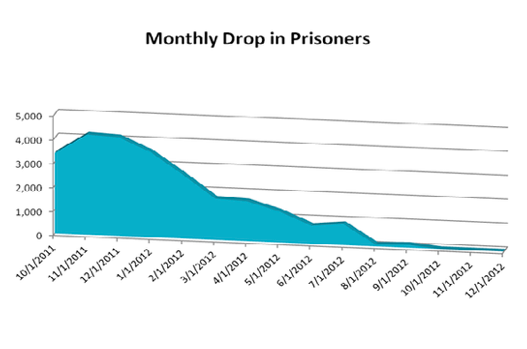
Something unanticipated is happening to the California AB109 Prison Realignment Reform.They have (as hoped) placed some 27,000 ex-prisoners under probation rather than parole supervision and by statute denied the courts and counties the authority to return these offenders to prison without a new serious or violent offense. But of late, the number of prisoners has stopped its substantial monthly reduction, to the point where the drop in state prisoners was a total of seventy-seven in August (see L.A. Times graph).


It’s somewhat unclear why the reduction in prisoners has been reduced to a trickle, but the situation presents serious problems for the state. Califronia is under a Federal Court order to reduce its prison population or face the Federal Court ordering the release of prisoners.

More baffling is the stabilization in the numbers of state prisoners. It is suggested in an article in the Los Angeles Times that it is the result of county judges who decide to send offenders to state prison, rather than keep them local. But judges have limited discretion to send offenders to state prison if the new offense is what is called a triple non (conviction of a non serious, non-violent. non- sex offender).  But those judges who are intent on sending triple nons, (with serious or violent prior convictions) to state prison, often have the discretion to do so. This may be why the prison population is no longer dropping. Clearly, further investigation and analysis is required to understand why realignment has hit a speed bump.


© 2007 -  Reentry Court Solutions. All Rights Reserved.


Reentry Court Solutions Powered by Communications Team