Virtual Incarceration is Here!

March 19,2013

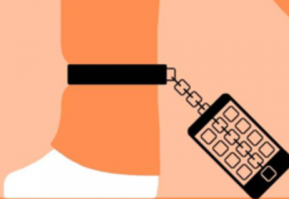
Screen Shot 2013-03-19 at 10.02.16 AMIt sounds like something out of an “Arnold” movie. We all knew it was coming. GPS, home detention, long range alcohol detection, all were leading us to the next level of alternatives to custody; “Virtual Incarceration”. Personally, it’s taken a while before I could climb aboard the band wagon, but here I am. There are people that need to be in prison because they are a danger to society and there are those, at the other end of the spectrum of supervision, that can be supervised, monitored , and even treated through digital technology.

Public Radio international, reports that, “A group of panelists at this year’s South by Southwest interactive media conference in Austin, Texas, presented an idea to improve the U.S. prison system with smart phone technology.The consulting firm, Deloitte, and its think-tank, GovLab, led a discussion on alternatives to the brick-and-mortar prisons low-level criminals are sent to. suggested the U.S. keep low-level criminals out of prison, using smart phone technology”. (click on the image on the left for the article and audio of the panel discussion)

One senior consultant for Deloitte, suggested “virtual incarcerations,” where nonviolent, low-level offenders are taken out of prison cells with support and monitoring that keeps both the community and the offender safe.

“When a court determines a low-level criminal is a good candidate for the smart phone program, they would be equipped with an ankle-monitoring device to track them with GPS, and given a locked smartphone with specific apps related to their needs.” For example,  A DUI offender might require Breathalyze, an app that detects eye movements in the camera on your phone”. The app would also allow the offender to meet with his parole officer via FaceTime on his phone.

These are good ideas, many of which are already being used in some jurisdictions. But it would be interesting to see a pilot project that put together all aspects of high tech supervision into what is now called “Virtual Imprisonment”.

Oklahoma turns back on Prison Reform

March 18,2013

Screen Shot 2013-03-19 at 11.57.54 AMOaklahoma consistently is among the top five states in the use of incarceration (number one for women). Under these circumstances one might expect it to follow in the steps of its conservative neighbors, especilly Texas, who have led in the extraordinary reduction in imprisonment and adoption of alternative to prison policies.

That was the case until recently, when according to the City Centinel, Governor Mary Fallin’s administration did an about face in its commitment to prison reform. The “justice reinvestment” initiative” (JRI), has in recent weeks seen a substantial weakening of prison reform plans, culminating in the resignation of JRI author Kris Steele, former speaker of the state House, from the inter-agency and private sector working group that was overseeing implementation”….Once again according to the Sentinel,”Gov. Mary Fallin’s legal counsel, Steve Mullins, has guided major shifts in administration and oversight in recent weeks, effectively gutting the infrastructure that led implementation until mid-February.”

The easiest way to follow the conflict and its various parambuations is to look at the individuals these changes are likely to affect.

According to Corrections Officials,” only a handful of parole violators were in the agency’s pipeline for intermediate sanctions (short of a return to full-fledged imprisonment) for what were described as technical rather than substantive or deliberate parole violations. While” Mental Health Department officials, in contrast, described early implementation touching more than 120 individuals…”

The “Tulsa World” describes this latest failure of will, as just one of a long history of planned prison reform failures in Oklahoma. This, of course, is just another example of the backsliding we are observing, as conservative states and jurisdictions actually come up against real reform and its consequences. More than a few step back from the brink, a phenomenum that is important to note and report as happens.

As I’ve descried in the past, the failure of states to embrace reform is important to note, but failures to implement or provide the  structure, resource or institutional support that can make prison reform and reductions in recidivism real, are a more insidious form of failure, that we need to be ever vigilant about.

Federal Reentry Courts and Other New Models of Supervision

March 11, 2013

Screen Shot 2013-03-11 at 2.09.10 PM


A new article on Federal Reentry Courts, by the Honorable Laurel Beeler, has been published in the March edition of the Federal Lawyer. It deals with the different models of Reentry Court as well as other problem-solving courts available at the federal court level (click on image on the left for full PDF of article).

The article  provides general information and an excellent introduction for those with an interest but little background in Federal Reentry Courts.


1 Year Process Evaluation of 8 Reentry Courts

March 11, 2013

Picture 3The DOj is putting money and effort into a project that  focuses on the  development of court based reentry efforts. One can sometimes get the impression that the courts are not a significant focus in the  federal government’s approach to state prison reentry issues. This project shows the opposite to be true.

The National institutue of Justice has released a one year process evaluation of eight Adult Reentry Courts that are sponsored under the BJA Second Chance Act. The National Institute of Justice’s “Evaluation of Second Chance Act Adult Reentry Courts: Program Characteristics and Preliminary Themes from Year 1”, was authored by Christine Lindquist, Jennifer Hardison Walters, Michael Rempel, and Shannon M. Carey. The document is the product of RTI International, The Center for Court innovation and NPC Research.  (click on image on the left for PDF of evaluation)

The eight reentry court jurisdictions being funded and evaluated are Union County, Arkansas, New Castle County, Delaware, Pinellas County, Florida, Boone County, Missouri, Strafford County, New Hampshire, Stark County, Ohio, Bexar County, Texas, and Norfolk County, Virginia.

The process evaluation will document the implementation of the evolving programs through three rounds of site visits, and be followed by an impact evaluation and a cost –benefit evaluation.

 From the I year site visit and process evaluation,

“Several programmatic characteristics were common across most sites, including the emphasis on post-release service delivery, the provision of a breadth of services relevant to the target population (with all sites offering substance abuse treatment and employment services), the use of a case management approach to coordinate and monitor services, the use of court hearings for the purpose of monitoring participants’ progress in the program, the use of drug testing, and a team approach to decision-making regarding sanctions and rewards. In all sites, reentry court participation is used as a condition of supervision, with the sentencing judge retaining jurisdiction over the participant in most sites. Therefore, almost all participants are under community supervision by a parole or probation officer for the entire duration of reentry court participation.”

Penn. to Scrap Current Half-Way House Contracts

March 4,2013

Screen Shot 2013-03-04 at 11.47.48 AMAn article in the Patriot Post, reports that “the state [Pennsylvania] is scrapping all contracts with the private companies that run 38 community corrections centers – better known as half-way houses – requiring them to rebid and making the new contracts performance-based. Pennsylvania is reacting to statistics showing that people who go through half-way houses are actually more likely to return to prison than people paroled directly to the street.

At first, it appears a reasonable plan, but there are concerns that need to be addressed. One issue  relates to the  nature of  different prolee populations in half-way houses.  Those with a high risk assessment may do poorly, as will drug addicts vs. those who are only drug abusers. Furthermore, it makes sense that those who are under greater observation in a half-way house will be found  in violation of their parole at a greater rate than those who are under minimal supervision. These are realities that one would expect the governor’s office to understand.

And then there are the intangibles.. The proposed program intends to include the number of arrests during and after half-way house residence, rather than relying heavily upon returns to prison. In some communities, this plan would give the police license to close down half way houses at will (and possibly return parolees to prison).  In my experience as a Reentry Court Judge in San Francisco, I fould that parolees were arrested more frequently than parolees in any other California county. Upon looking into the matter further, it was obvious that San Francisco parolees were an easy arrest target for police (a parolee with a search clause). Living in a twenty block area known as the Tenderloin, all parolees lived in a ghetto of drug addicts, the mentally ill, those on probation or their Own Recognizance, the old and infirm, and their predators. In a high income city’s ghetto, with little opportunity to live elsewhere, it was nearly impossible for parolees to live  a healthy,drug and crime free life.  In 2010, the return to prison rate for non-reentry court parolees was approximately 78%. Making arrests of parolees in the Tenderloin was like shooting fish in a barrel.

Before instituting an incentive based half-wayhouse program, Pennsyvania may want to review the scientific literature on half-way houses. Those that are most successful have prepared the parolee for the transition to the community while still in prison, providing counseling, education, and job training, and importantly “cognitive behavioral therapies” (the only program dealing with criminogenic risk showing significant success).

People ultimately make a program successful or not. Half way houses often are poorly resourced, with staff who have little expertise or training for their positions. Additionally many states stuff hundreds of transitioning parolees into half-way houses with deplorable but expected results. New Jersey was rocked this past July by revelations in a Series in The New York Times, describing “escapes, drug use, lax security and violence — including sexual assaults — at facilities intended to transition individuals back into the community, often after serving jail time. The report said since 2005, there have been about 5,100 escapes from the state’s halfway houses, many run by Community Education Center”.( a predictable outcome where hundreds of offenders were in individual half-way houses, when what is needed is individual programs made up of a few dozen particpants at best, with a high ratio of workers to participants; to view comprehensive New York Times articles, click on photo on left.)

Since Pennsylvania is prepared to hold Half-Way Houses responsible for the arrests made after parolees leave the facility, one must consider what kind of follow-up the half-way house will have with the parolee. Will the parolee be required to attend aftercare sessions and remain in close contact with their half-way house counselors. Will they be assisted by the half-way house in guiding  their reentry into society. And finally, what will be the nature of supervision to contain drug abuse and criminality. And as importantly,  will the parolee be required to engage in pro-social activites, like school, job training, volunteer work, and other forms of community involvement. It was my experience that the court was an excellent means to institute a controlled return into the community. As the judge is universally acknowledged as a community leader, all intervenors seem to work well with the judge, even when they are reluctant to work with each other, encouraging a more collaborative, and comprehensive level of supervision and rehabilitation ofr the parolee in the community.

 

Big Labor, a Big Opponent of Prison Reform

March 4, 2013

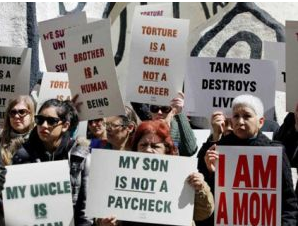
Screen Shot 2013-03-04 at 12.27.52 PMAs reported by James Ridgeway and Jean Casella in Mother Jones magazine, “On January 4, the Tamms Correctional Center, a supermax prison in southern Illinois, officially closed its doors. Tamms, where some men had been kept in solitary confinement for more than a decade, was notorious for its brutal treatment of prisoners with mental illness—and for driving sane prisoners to madness and suicide. The closing, sought by human rights and prison reform advocates was vociferously supported in demonstrations outside the prison’s gates ( for Mother Jones article, click on image on left photo image on the left).

What was surprising was the fierce opposition of big labor, even when all staff was promised continued state employment.The major force holding up the closure of  was the American Federation of State, County, and Municipal Employees (AFSCME), which, according to its website, represents 85,000 corrections employees nationally (as well as a total membership of1.6 million members. As well described in the Mother Jones article, prison unions and their partners in big labor have taken a more and more aggressive stance against prison closures. The article holds out some hope that the fissure between labor and prison reform cn be closed.


IADTC and OAS take lead in South America

Feb.25,2013

Screen Shot 2013-02-24 at 2.52.46 PMA team of Organization of American  States (OAS) and International Association of Drug Treatment Court officials, along with national and region-wide anti-drug institutions, are hard at work, assisting in the development of drug courts in the Southern Hemisphere. Among the states that the OAS is working closely with are Barbados, Chile, Costa Rica, Jamaica, Peru, and Trinidad and Tobago (T&T), .  Antonio Alomba leads the OAS effort to assist South American and Caribbean nations in the development of drug courts. In the  training held in Trinidad, between Feb.21-23. IADTC President, Justice Kofi Barnes of the Ontario Supreme Court, led a team of drug court professionals from Canada, the United States, and the Caribbean (Jamaica specifically).
Having been part of training programs in the past, I was very impressed with the professional quality of the training itself, and the seriousness and commitment that the T & T magistrates showed over the course of the training. The training itself was the result of a special criminal justice committee, focused on drug treatment courts, led by the Honourable Mr. Justice  Geoffrey Henderson, of the High Court of Trinidad and Tobago [see photo on left].

There are other organizations, both national and international, engaged in the development of drug courts outside their national borders. I bring this particular training to your attention because I was in attendance, and because i believe that prison and criminal justice reform are directly and inextractibly connected to drug courts.  The OAS and IADCP are well aware that where drug courts show themselves to be effective, that can be the first step toward real prison reform and the development of other alternatives to prison.

I have a slightly different perspective. When abroad, I try to visit criminal courts and prisons in many of the countries I visit. It’s my belief that there are differences in cultural approaches to criminal rehabilitation that can be of tremendous importance to American drug courts. And that there is much to learn from the criminal justice systems in other, more traditional cultures.

Momentum for Prison Reform?

Feb.18,2013

Screen Shot 2013-02-18 at 10.46.15 AMA new article, in “Think Progress”, cites a host of authorites and experts who claIm that a burst of activity in the prison reform field, may signify a change of course in the criminal justice system. The article goes on to cite authorities such as the Wall Street Journal and the conservative website “Right on Crime” , as well as, the National Conference of State Legislatures and the progressive “Sentencing Project”. As a check on over-enthusiam, the Sentencing  Project reminds us, “25 states still had stable or increasing [prison] population” (click on image on left for Sentencing Project’s “On the Chopping Block: State Prison Closings”)

The question I posed at the beginning of the year “A New Year’s Editorial: Has Penal Reform Peaked“, continues to concern me.  The momentum for Prison And Sentencing Reform,  that “Think Progress” reports, is good news that should not be discounted, but the question remains as to whether reform will be substantial and self-susutaining. It’s important to monitor the extent of existing and proposed reform and the quality of that reform.

It should be remembered that we have been here before, and if we do not provide resources, supervision, and assistance as needed, we may find ourselves in a worse place than when this reform process began.


New Study Supports California Realignment Reform

Screen Shot 2013-01-27 at 11.39.45 PMJan. 28, 2013

From a press release by CSG:

“A study has been released  by the Council of State Governments, entitled The Impact of Probation and Parole Populations on Arrests in Four California Cities” (click on image on the left for a PDF copy). The study attempts to answer a question that to date has been a matter of speculation among law enforcement and corrections officials everywhere: to what extent do people on probation and parole contribute to crime, as measured by arrests?

Researchers at the CSG Justice Center collected and matched more than 2.5 million arrest, probation, and parole records generated between January 1, 2008 and June 11, 2011. Collecting and analyzing the data required the  efforts of 11 independent agencies, including four local police jurisdictions, four county probation agencies, two county sheriffs’ departments, and the California Department of Corrections and Rehabilitation.

Among the most notable findings in these four jurisdictions:

  • The majority of all adult felony and misdemeanor arrests were of people who were not currently under supervision. People under supervision accounted for only 22 percent of total arrests.
  • Whereas people under probation and parole supervision accounted for one out of every six arrests for violent crimes, they accounted for one out of every three drug arrests.
  • During a 3.5 year period in which total arrests fell by 18 percent, the number of arrests involving individuals under parole supervision declined by 61 percent and by 26 percent for individuals under probation supervision.”

It is argued that the 3.5 year study, immediately preceding the implementation of California’s Realignment Reform (starting in October, 2011) provides evidence of Realignment’s success. This preliminary information should encourage the legislature to move forward with rational prison reform, the simplification of the state’s sentencing laws, and the reduction in the extraordinary prison terms for violent crimes (that have doubled over the past thirty years).

On the other hand, sceptics of realignment, argue for an independent study of realignment, commissioned by the legislature, to determine the true effect of realignment ( see article by Dan Walters of the Sacramento Bee). To my mind, it is too early to come to any definitive conclusions, but that data should continue to be collected, while California moves forward with prison reform.


Longer sentences are not necessarily better

Screen shot 2012-11-04 at 6.14.22 PMJan. 28, 2013

Last week, I presented the Center for Juvneile and Criminal Justice Center’s Lizzie Buchen, whose article,  “For real prison reform, look beyond the non, non, nons”, argued that research coming out of the PEW Center of the States, supports the position that longer sentences are a major reason for the explosion in prison populations and  the enormous cost of keeping prisoners locked up.  (PDF of the PEW article, “Time Served; The High Cost, Low Return of Longer Prison Terms”)

This week, Lizzie Buchen, follows with a second article, that argues for a California Sentencing Commission; “Even for violent crimes, longer is not always better” She writes,

“For the offender, longer is certainly not better: As the years go by, inmates often become more distant from their families and communities, less employable, and more deeply ingrained in prison culture (becoming “institutionalized”), all factors that hamper reentry”.

Finally, I would argue that the public’s hunger for safety (1000 sentencing bills passed by the legislature over the past three decades), is a serious problem that we need to come to grips with. How long is enough? Why does California have an almost impenetrable web of sentencing law. California’s sentencing grid is a constantly changing labyrinth of overlapping, entangling, and bewildering law that is truly understood by the few who have taken upon themselves the task of enlightening the criminal justice field. These are unacceptable circumstances that need to be addressed by the governor  and the legislature, through a Sentencing Commission, that can rationally and reasonably review, clarify and simplify our maze of sentencing laws.

Disagreement on Impact of FBI statistics

Screen shot 2012-12-02 at 10.56.20 AMJan. 28,2013

The FBi’s release of California crime statistics unleashed charges from both pro and anti-realignemnt advocates. Each side claimed that the statistics supported their position as to the effect of realignment reform upon crime in California. A January 24th LA Times article articulated the positions of both sides.

“The Sacramento-based Criminal Justice Legal Foundation said that statistics released by the FBI, show a 7.6% increase in homicide and double-digit increases in burglary and auto thefts the first half of 2012 when compared to the first six months of 2011″.

The Center on Juvenile and Criminal Justice, on the other hand, found there was ” no connection between those changes and places with the proportion of “realigned offenders,” individuals who would have gone to prison in the past but are now the wards of counties. In fact, crime rates dropped in five counties receiving a disproportionate share of those new prisoners.”

And so the argument as to realignment and its impact upon crime levels continues. With conservative and many law enforcement agencies decrying the return of prisoners to county supervision and custody, as a danger to public safety. And so-called reformers and human-rights advocates arguing that realignment is working, and where there are problems, they are caused by the government’s reluctance to take the reforms further and to provide the resources and support required for such a major  shift in prison policy.


2013 BJA Second Chance Act Adult Mentoring Solicitation

Screen Shot 2013-01-27 at 10.56.03 PMJan. 28,2013

As described in the Council of Sate Government’s Press Release ( click on image on the left for PDF of solicitation)

“On January 22, 2013, the U.S. Department of Justice’s Bureau of Justice Assistance released the fiscal year 2013 solicitation for the Second Chance Act Adult Mentoring and Transitional Services for Successful Reentry Program. Nonprofit organizations and federally recognized Indian tribes are invited to apply to receive up to $300,000 over a two-year period to provide mentoring and transitional services to individuals returning from prison or jail. Awards will be made in two categories: mentoring programs for adult offenders generally and mentoring programs that focus on adult offenders who are parents, particularly those who are non-custodial parents. Applicants may apply under Category 1 or Category 2, but not both”

Applications are due by 11:59 p.m. ET on March 21, 2013.


California prison terms for violent criminals more than double

In an article published by the Center on Juvenile and Criminal Justice, the Center disputes Governor Brown’s argument that all those who could safely be released from prison had already been released. The Center relies in part on a recent study by the Pew Center for the States (click on image on the left, to obtain a PDF of the PEW article, “Time Served; The High Cost, Low Return of Longer Prison Terms”)

The Center on Juvenile and Criminal Justice, relying on PEW data, argues that ”  California offenders who committed violent crimes can now expect to serve 7 years in prison — in 1990, they would have served less than 3. Looking at people who committed murder, those who were released in 2009 served an average of 16 years; now, they can expect to serve more than 50 years. This lengthening of sentences for violent crimes is a major reason California’s prisons are overflowing and will continue to do so. In 2009, nearly 100,000 of the state’s prison inmates were doing time for violent crimes, a number that will only grow as the exit door continues to recede.”

It would appear that Governor Brown’s suggestion to the rest of the nation, that they consider California as a model for Penal Reform, may be a bit premature. While the Governor’s realignment plan and funding are an important start in California’s Penal reform process, it would appear that we have a long way to go before we can describe the California Penal System California as a model.


Cal satisfied with reform, though 8900 in Private Prisons

Jan. 14, 2013

Governor Brown has made his position clear. He will take the issue of whether additional prisoners should be released, back to the Federal Courts. The question to be answered is whether California has he done enough to satisfy the courts, by reducing the number of prisoners by 43,000 inmates over the last 15 months.

Governor Brown claims that medical concerns, the basis of the federal court order, have been satisfied both by medical facility improvements and  by substantial reductions in the number of prisoners.  Brown has attacked the courts as meddling with the internal affairs of California. Reform advocates on the other hand, argue that California hasn’t done enough to reduce the number of inmates, and that even a reduction by an additional 13,000 inmates as the court order demands, is only a first step in enacting necessary prison reform in California.

A related issue is the number of California prisoners in private prisons. According to a recent article in the Los Angeles Times, “State prison reports show that since November, California has been increasing the number of inmates shipped out of state. Brown last year said he intended to end the state’s contracts with private prison operator Corrections Corp. of America as a way to save money. A July research brief for the Center on Juvenile and Criminal Justice, reports that the state currently spends more than $426 million a year to buy space at prisons operated by the Tennessee-based company. (The California Department of Corrections and Rehabilitation contends the spending is much lower: $316 million.) The number of out-of-state inmates has run from a high of 10,000 in 2010 to a low of 8,500 last October. State prison population reports show it rose to more than 8,900 in late December”


This is a “hot button” issue for many prisoner advocates, as private prisons, located outside the state, make contact with family and community difficult at best.It remains to be seen whether the courts will lift their demand that California reduce its prison population further or whether Brown will succeed in staving off further prison reductions. But the issue of whether California has gone far enough to reduce its prison population, will continue to be a highly charged issue.

BJA calls for application for Technology Training Grant

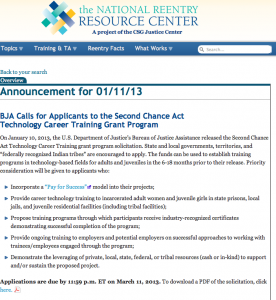
The Council of State Governments has released this press release announcement regarding the recently announced  Bureau of Justice,  Call for Applicants for the Second Chance Act Technology Career Training Grant Program. The deadline for applications is March 11, 2013. [See full announcement by clicking on image to the left]

© 2007 -  Reentry Court Solutions. All Rights Reserved.


Reentry Court Solutions Powered by Communications Team